
Last updated November 21, 2026
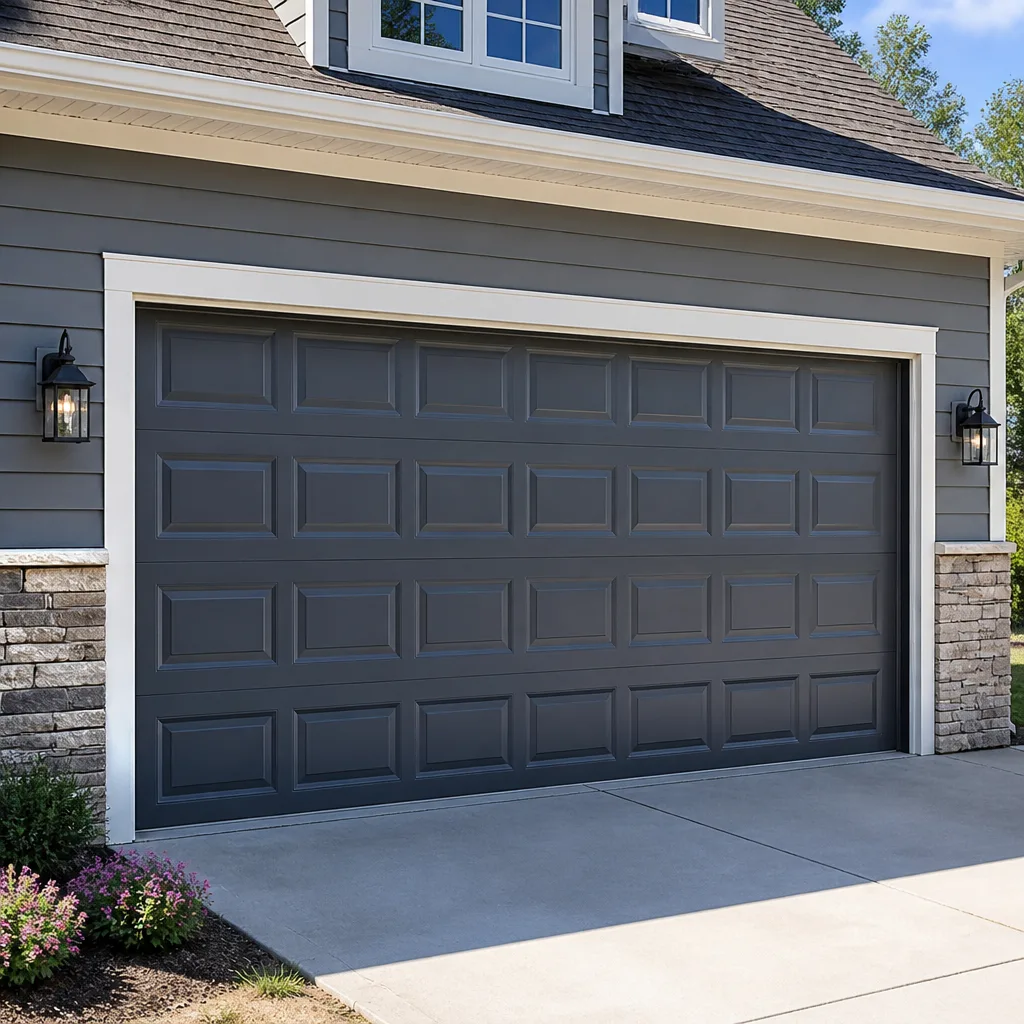 Raised-panel steel
 Carriage house
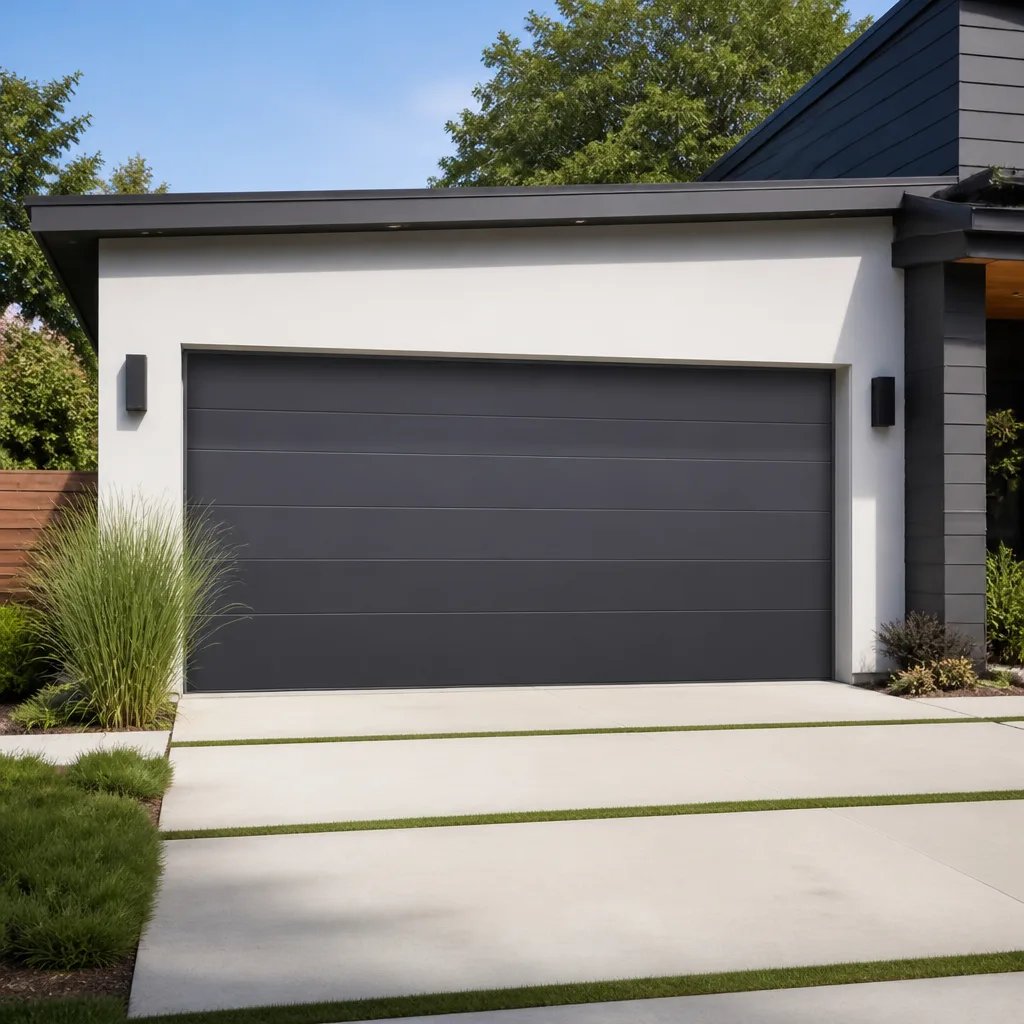 Modern flush
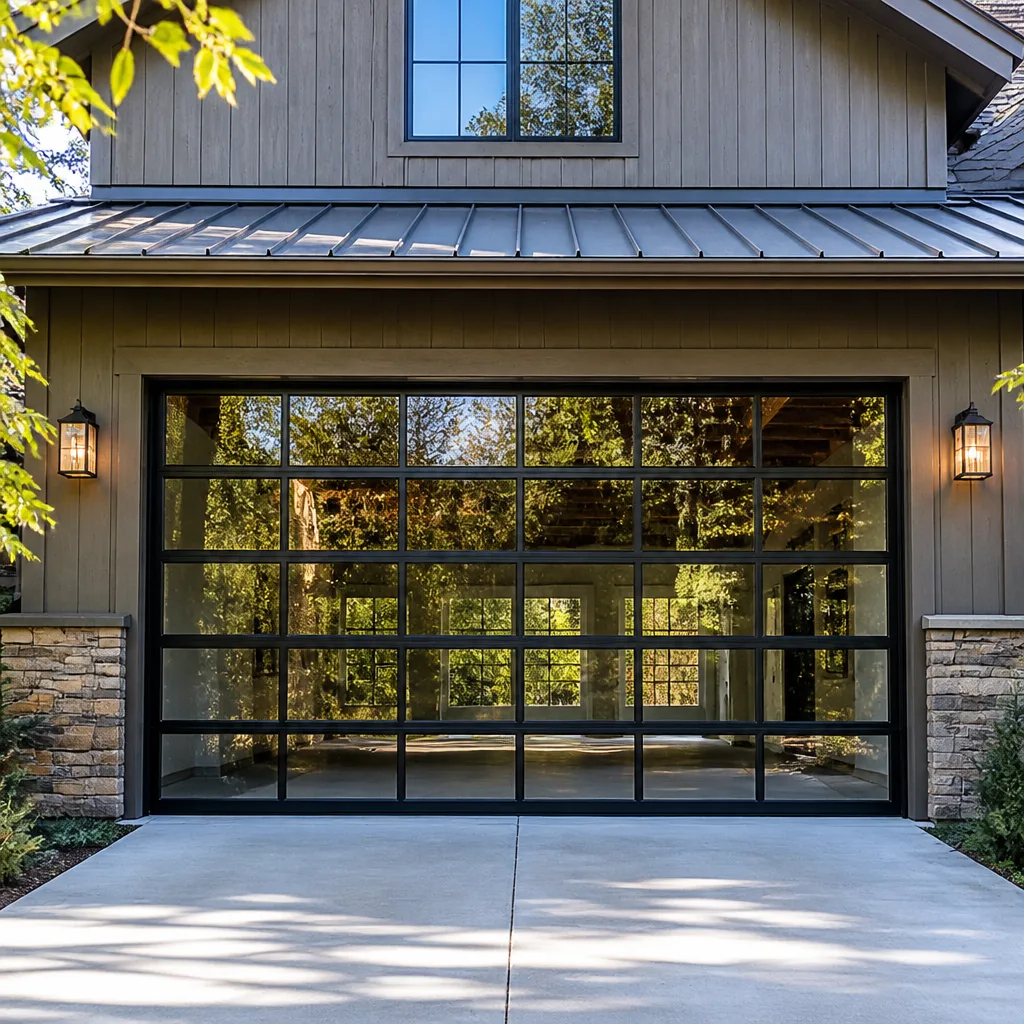 Full-view glass
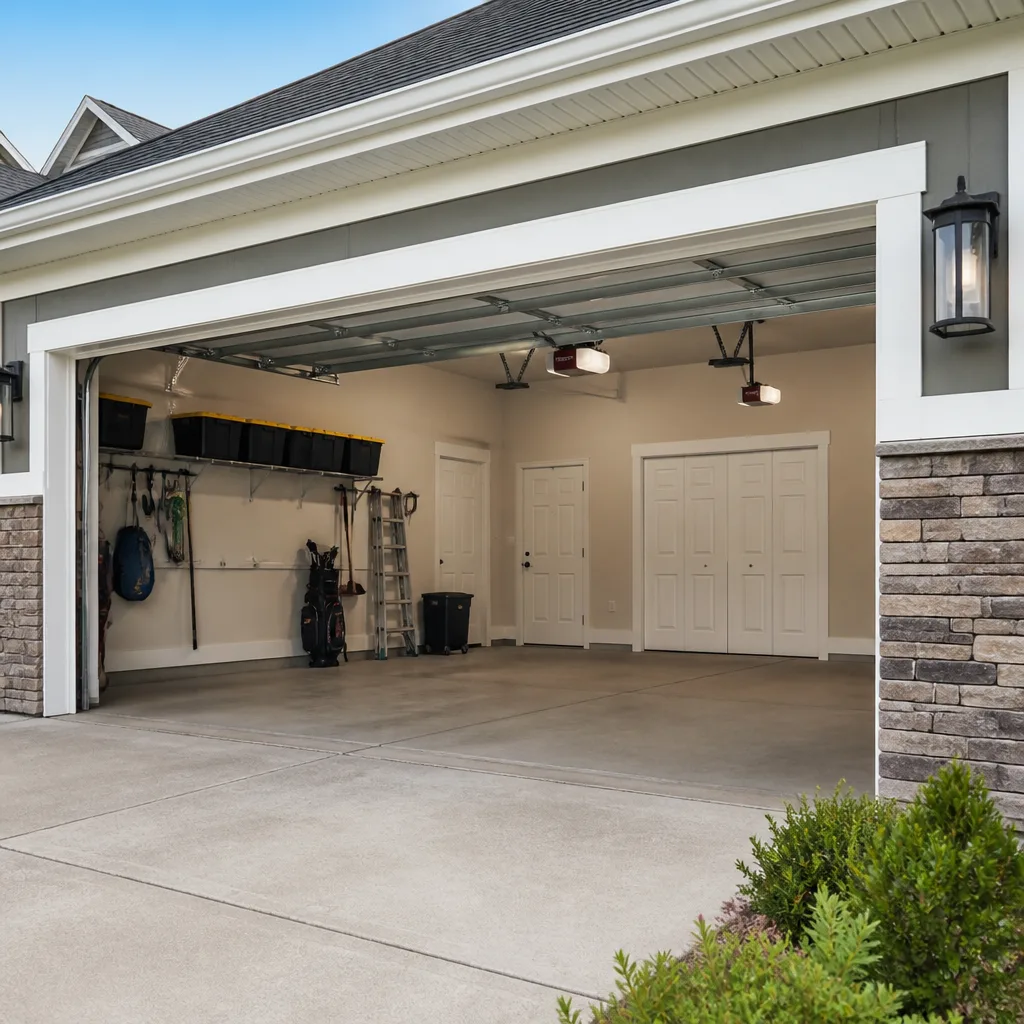 LiftMaster openers
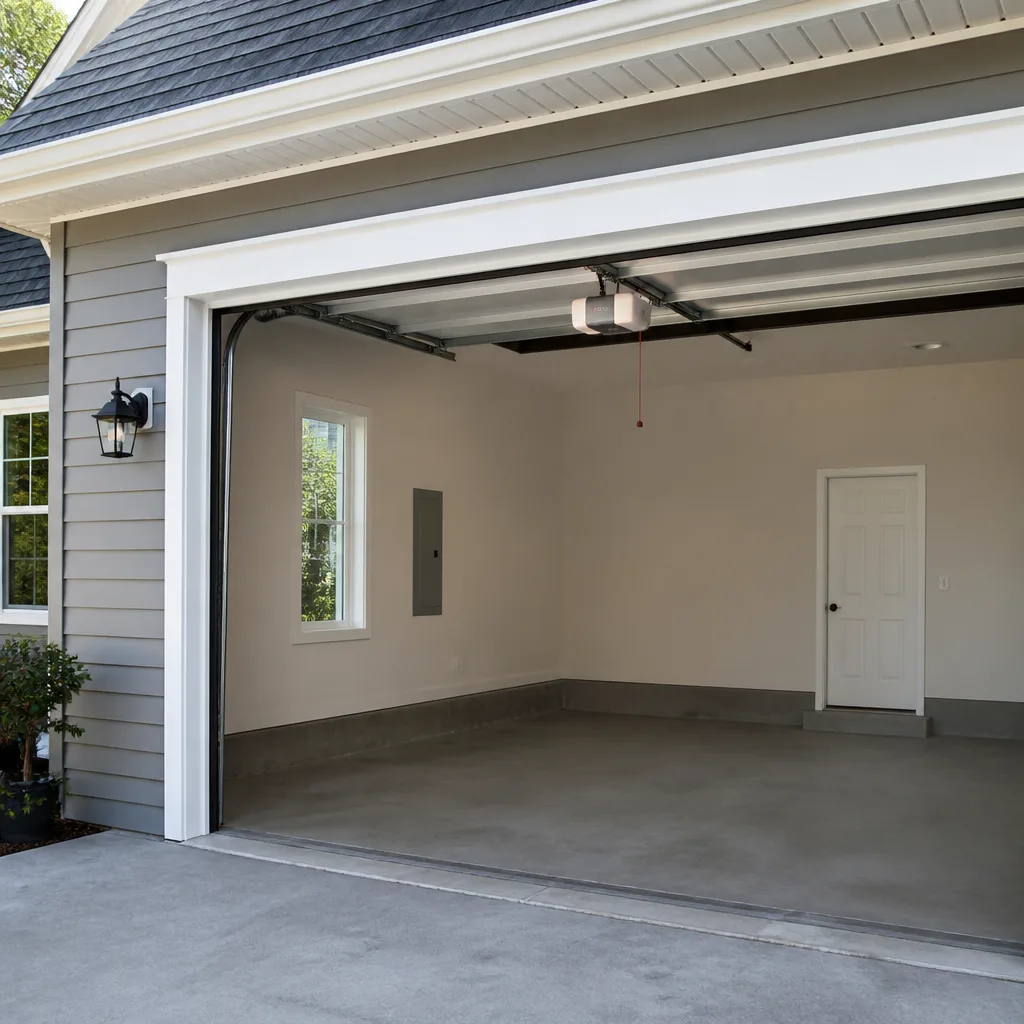 Chamberlain openers
Full 25-point door and opener safety check with every visit - springs, cables, rollers, tracks, and your LiftMaster or Chamberlain opener included
You get a price before we start. It does not change when the pro arrives.
Get your free estimateDIY vs Professional Garage Door: The Poinciana Homeowner’s Decision Guide
Torsion springs store enough energy to cause serious injury when released improperly. That’s not an exaggeration to sell service calls; it’s physics. But replacing a bottom weather seal or reprogramming a keypad? Those are genuinely straightforward tasks any homeowner can handle in 20 minutes. The DIY-versus-professional question for garage doors isn’t really about whether you’re handy. It’s about which specific tasks carry mechanical risk that makes professional work the only sensible choice, and which ones genuinely don’t. This guide makes that call task by task, without defaulting to “always call a pro” as a liability-driven cop-out. We’ll give you a definitive task list, explain the mechanical reason behind each category, and cover the Florida permitting piece most guides skip. Poinciana homeowners rely on their garage door as a daily entry point, so getting this right matters.
Quick Answer
In Poinciana, you can safely handle lubrication, weather seal replacement, sensor cleaning, keypad programming, and visual inspections yourself. Torsion and extension springs, cables, and anything involving the counterbalance system should always go to a trained technician, because those components hold lethal stored energy. Everything involving a full door replacement needs a permit, so that’s professional work too. The honest middle path is DIY maintenance plus annual professional spring and cable inspections.
Styles & brands we work with
- Raised-panel steel
- Carriage house
- Modern flush
- Full-view glass
- LiftMaster openers
- Chamberlain openers
Table of Contents
- The Three-Column Task List: Safe DIY, DIY With Caution, and Technician-Only
- The Mechanical Reason Behind Each Category
- The Florida Permitting Piece That Changes the Math
- What Tools You Actually Need (and the “Repair Kits” That Waste Your Money)
- How to Tell If a Previous DIY Repair Was Done Correctly
- The Honest Middle Path: DIY Maintenance Plus Annual Inspections
- Why Brand Familiarity Matters in Poinciana
The Three-Column Task List: Safe DIY, DIY With Caution, and Technician-Only
Most guides split garage door work into two buckets: “call a pro” and “do it yourself.” That’s not useful. The real split is three columns, and the middle one is where homeowners get themselves into trouble. Here’s the breakdown we give Poinciana homeowners who ask what they can safely tackle on their own.
Column 1: Safe DIY
These tasks involve no stored spring tension and no risk of the door coming down on you. Any reasonably careful homeowner can handle them with basic tools.
- Lubricating hinges, rollers, and tracks with a proper garage door lubricant
- Replacing the bottom weather seal (the rubber strip along the floor)
- Cleaning and aligning the safety sensors at the bottom of the tracks
- Programming a new remote or keypad, or resetting opener codes
- Cleaning the photo-eye lenses and wiping down the tracks
- Visual inspection: looking and listening for wobble, grinding, or misalignment
- Tightening the bracket bolts and hinge screws that work loose over time
Column 2: DIY With Caution (and what “caution” means)
“Caution” is not a vague warning. It means the task is doable but involves a component that can bite you if you rush or skip a step. Read the manufacturer’s instructions fully before you start, wear safety glasses, never stand under a partially open door, and know exactly what a wrong adjustment does before you turn a wrench.
- Adjusting the opener’s travel limits or force settings. Doable, but a wrong force setting can hide a binding door and eventually burn out the motor or defeat the safety reverse. Test the safety reverse with a roll of paper towels after any change.
- Replacing rollers. Mostly doable with the door fully closed, but the bottom roller on some doors sits near the cable, and pinching that cable while reinstalling a bracket is a real hazard. If you can’t see daylight between the roller and the cable, stop and call.
- Adjusting the track alignment with a rubber mallet. Light taps near the mounting brackets are fine. The vertical track sections that hold tension in a door under load are not something to bend by feel.
- Replacing a wall-mounted opener button or adding a second one. Straightforward low-voltage work, but read the wiring diagram for your specific unit rather than guessing.
Column 3: Technician-Only
This is the column where the mechanical risk makes professional work the only sensible choice. There is no “careful homeowner” version of these jobs.
- Replacing torsion springs (the horizontal springs above the door) or extension springs (the springs alongside the tracks)
- Replacing or reattaching the lift cables
- Replacing drums, bearing plates, or center brackets
- Replacing or repairing a bent or broken bottom bracket
- Replacing the full door or any large panel section
- Converting between extension and torsion spring systems
- Any repair on a door that has come off its tracks or is stuck open
If you want the professional side of that list handled, our garage door spring repair team works on both torsion and extension systems every day, and we can look at the door as a whole during the same visit.
The Mechanical Reason Behind Each Category
The three-column split isn’t arbitrary. It comes down to stored energy and load. Understanding why a task lands in a given column is the difference between a homeowner who knows their limits and one who guesses wrong.
Why springs and cables are technician-only
A torsion spring on a standard residential door is wound under tension to counterbalance the door’s weight. When it’s holding a door with the correct amount of turns, it’s storing enough energy to lift the door with one hand. When it releases unexpectedly, that energy goes into whatever is in front of it. The spring itself, the winding bars, and the cable drum all rotate with force you can’t stop with your hands. There is no safe homeowner version of winding a spring, and no reputable manufacturer sells the correct winding bars to the public for good reason.
Why weather seals and sensors are safe
A weather seal is a rubber or vinyl strip held in an aluminum retainer at the bottom of the door. The door is fully closed, there’s no stored energy in the assembly, and the work is done with hand tools at ground level. Safety sensors are low-voltage photo-eyes at the bottom of the tracks. You clean the lens, check for obstruction, and confirm alignment. Nothing above you is moving.
Why the middle column exists
Opener adjustments, roller swaps, and track nudges all sit on a boundary. They touch the moving system but not the counterbalance. A wrong force setting doesn’t hurt you today, but it lets the door close on a child’s toy or a pet without reversing. A roller swap near a cable bracket is fine at full close but becomes dangerous if you lift the door even a foot. That’s why “caution” here means specific things: work with the door closed, wear glasses, test safety reverse after any change, and stop if the assembly doesn’t look the way the manual shows.
The Florida Permitting Piece That Changes the Math
Replace a garage door in unincorporated Polk County or Osceola County and you’re likely pulling a permit, because the door is a structural opening in the home’s wind envelope. Skip the permit and you may find your homeowner’s insurance won’t cover storm damage tied to an unpermitted door. That single fact reorders the entire DIY-versus-professional calculation for full door replacement, in Poinciana and across Florida. Insurance companies care about whether the opening was permitted, inspected, and closed out properly. A door installed on a weekend with no permit is a door with no paper trail, and the cost of that gap can dwarf whatever the homeowner saved by doing it themselves.
What the permit process actually involves
- Confirm the door’s product approval and design pressure rating match what your home and the local building department require.
- Submit the permit application with the door’s specifications before any removal starts.
- Remove the old door and install the new one per the manufacturer’s instructions.
- The inspector visits to confirm the door is anchored, sealed, and installed to spec.
- Receive the final inspection sign-off so the permit is closed. Your insurer will typically want that record on file.
Ask your local building department directly about current permit requirements for your address, since the specifics vary by jurisdiction and change over time. If you’re replacing a door and want a written price before anything is ordered, our garage door repair team can measure the opening, confirm the specs, and quote the job.
What Tools You Actually Need (and the “Repair Kits” That Waste Your Money)
The grandest lie in the garage door aisle is the “garage door repair kit.” A bag of springs, a few winding bars in a blister pack, and an instruction sheet that glosses over the real danger. Homeowners buy them because the price looks like a bargain against a service call. Then they either can’t finish the job or finish it wrong. The correct tool list for legitimate DIY work is short, cheap, and specific.
The real tool list for safe DIY tasks
- A 6-foot stepladder (for sensor and track work at the sides, never for working over an open door)
- A socket set with the standard sizes for your door’s hinge and bracket bolts
- A set of screwdrivers, flat and Phillips
- Silicone or lithium garage door lubricant (not WD-40, which attracts dirt)
- Safety glasses and work gloves
- A roll of paper towels for the safety reverse test
- A smartphone for photographing wiring before you unplug anything
What to leave on the shelf
Pre-packaged spring “kits,” universal winding bars, off-brand torsion springs of unknown weight rating, and anything that promises to “convert” a garage door’s spring system without a technician. A spring is factory-matched to a specific door weight, and the wrong rating puts uneven load on the opener and the door’s hardware. Big-box springs are cheap because they’re generic; the wrong spring isn’t a bargain, it’s a failure waiting to happen. Poinciana’s humidity also means lubricants matter: a proper garage door lubricant stays put through summer, while a light all-purpose oil runs off and leaves the rollers dry.
How to Tell If a Previous DIY Repair Was Done Correctly
If you’ve bought a Poinciana home where the previous owner tackled garage door work, a technician visit isn’t just about fixing what’s broken. It’s also a chance to verify what’s already there, because a mis-sized spring or a poorly reattached cable can sit quietly for months before it announces itself. Here are the signs a trained tech looks for.
Signs of a cable reattached wrong
- The door hangs unevenly when fully open, with one side sitting higher than the other
- The cable is frayed, kinked, or looped rather than running straight along the drum
- The cable end isn’t secured inside the bracket or has been crimped mid-run instead of on a proper thimble
- Black metal dust at the bottom of the cable drum means the drum and cable aren’t tracking correctly
- The door pops or shudders when it first starts to lift
Signs of a spring replaced with the wrong weight rating
- The door feels unusually heavy or strangely light when you lift it by hand at the midpoint
- The door won’t stay at half-open on its own (an indicator the spring isn’t balancing the door weight)
- The opener strains, sounds louder than it should, or the door’s force setting has been turned way up
- Color codes on the springs don’t match the door manufacturer’s specification for your door size
- The spring is visibly a different diameter or length than its matched partner
If any of these match what you’re seeing, an inspection is worth scheduling. We can also address opener side issues at the same visit, which is what our garage door opener repair team handles when a door’s been fighting its opener for a while.
The Honest Middle Path: DIY Maintenance Plus Annual Inspections
Homeowners who lubricate their own rollers and hinges, wipe down their sensors, and keep their tracks clear, but also schedule a professional spring and cable inspection once a year, tend to have the lowest total maintenance cost over a door’s lifespan. This isn’t a sales line, it’s the pattern we see most often when we’re out on routine inspections in Poinciana. The DIY maintenance is what keeps the door moving smoothly and catches the small stuff early. The annual inspection is what catches the things a homeowner can’t see from the ground: a cable beginning to fray inside the drum, a spring with a hairline crack in the coil, a bearing plate showing the first sign of wear.
What a homeowner’s maintenance routine should include
- Once a month: visually check the springs, cables, rollers, and hinges for obvious wear, and clean the safety sensor lenses.
- Once a month: run the door and listen. Any new grinding, squealing, or popping is a reason to schedule an inspection rather than wait.
- Twice a year: apply garage door lubricant to the hinges, rollers, springs (a light coat on torsion springs where specified), and bearings.
- Twice a year: test the safety reverse by placing a roll of paper towels in the door’s path and confirming the door reverses on contact.
- Once a year: schedule the professional spring and cable inspection before the season you use the door most.
What an annual inspection adds
A trained technician checks the things a visual from the floor can’t reach: cable wear inside the drum, spring coil surface for fatigue cracks, bearing wear, and the balance of the door at multiple positions. If the door’s been fighting a slight imbalance for six months, that’s caught before the spring fails and the door comes down hard. If you handle your own lubrication and want the professional inspection done, our Poinciana Garage Door Repair Co team can fold a spring and cable inspection into any other service call.
Why Brand Familiarity Matters in Poinciana
Poinciana’s housing stock runs the brand spectrum. We regularly work on Clopay and Amarr doors in the newer subdivisions, Wayne Dalton and Craftsman doors on resales, and LiftMaster and Chamberlain openers throughout. Every one of those brands uses slightly different hardware, spring ratings, and adjustment points. A technician who shows up familiar with the exact door and opener already on your home can diagnose in one visit. A generalist handyman who knows only one brand spends the first hour of the appointment figuring out what he’s looking at.
Why this matters for the DIY decision
If your door is one of the eight major brands we work on, you have a professional option that’s brand-fluent. If it’s an odd or discontinued door, we can still diagnose it, but the DIY line gets a little thinner because parts availability becomes a factor. Either way, the task split doesn’t change. Safe DIY stays safe DIY, and technician-only stays technician-only, on every brand. The difference is how quickly the technician can finish the professional half. We service all eight major brands, so the recommendation you get is based on your door and your budget rather than which brand pays a referral margin.
Common Mistakes to Avoid
- Trying to lift or “unstick” a door with the spring removed. With the spring off, the full weight of the door rests on the tracks, the cables, and whatever’s under it. It’s a recipe for a bent bottom section or a door that comes completely off the tracks.
- Buying a “universal” spring from a big-box store. A garage door spring is weighted to a specific door, and the wrong rating sends excess load through the opener and cables. This is one of the most common failure patterns we see in older Poinciana homes bought from a previous owner.
- Turning up the opener’s force setting instead of fixing the underlying binding. The force setting exists so the door reverses on contact. Crank it up and the safety reverse quits working, which is a serious safety problem, not a fix.
- Replacing a full door without a permit. Insurance companies may decline to cover storm damage tied to an unpermitted door, and the permit gap doesn’t show up until you need it. Always confirm what your local building department requires for your address before ordering a door.
- Lubricating with WD-40 or general-purpose oil. A dedicated garage door lubricant stays on the moving parts through the summer. A light oil runs off in a week and leaves them dry.
- Ignoring a rattle, pop, or shudder. A misaligned door sometimes announces itself weeks before a cable fails. The pop you hear on the way out is a signal, not something to tune out.
- Letting a door sit stuck open or closed. A door stuck off its tracks is a security and safety problem. Both need a technician, not a weekend of trying.
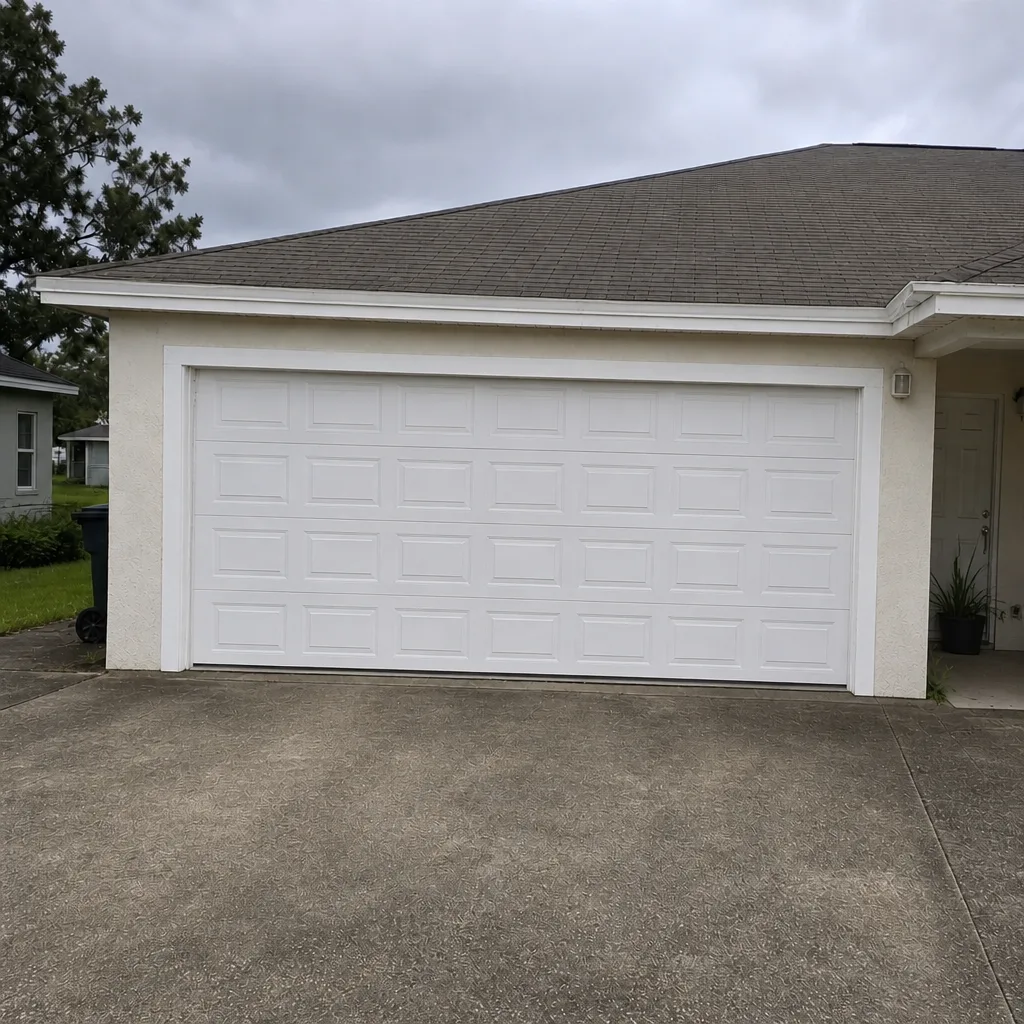
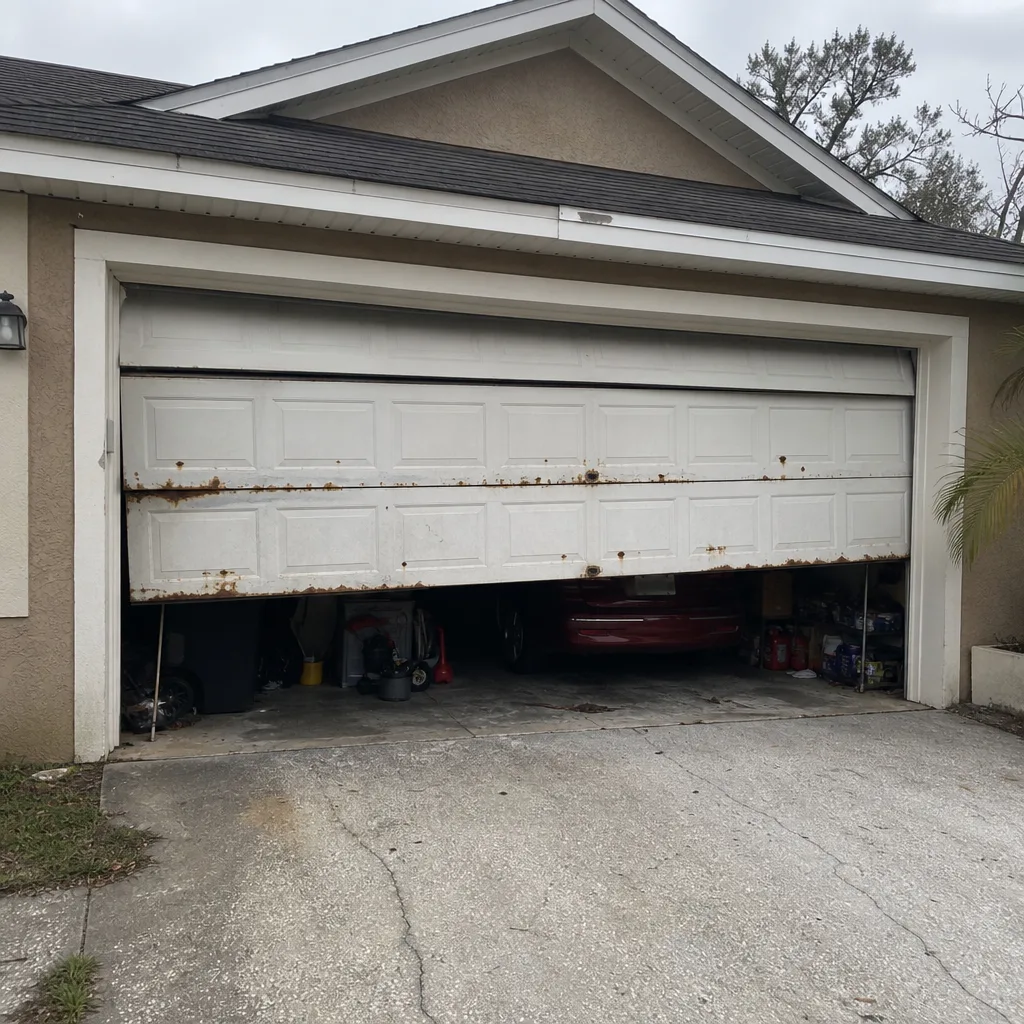
See the difference
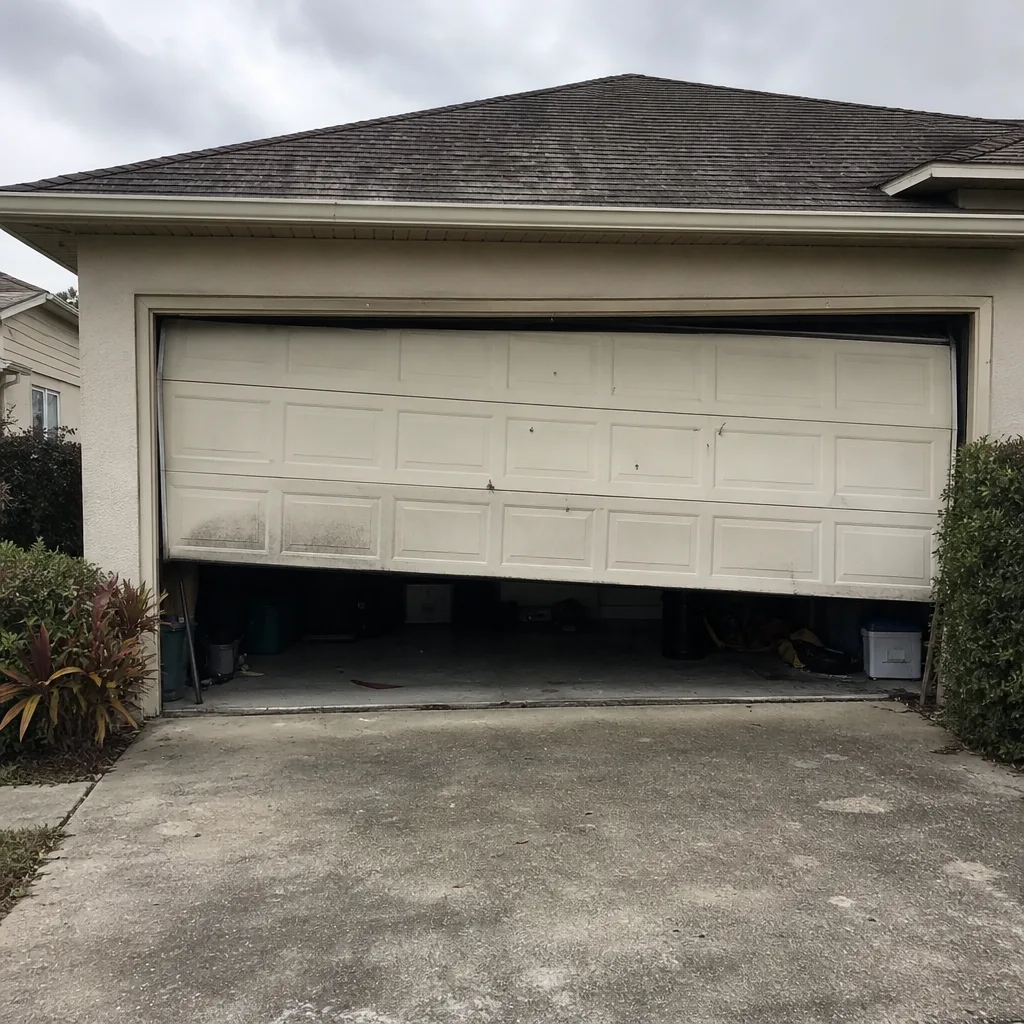 Before
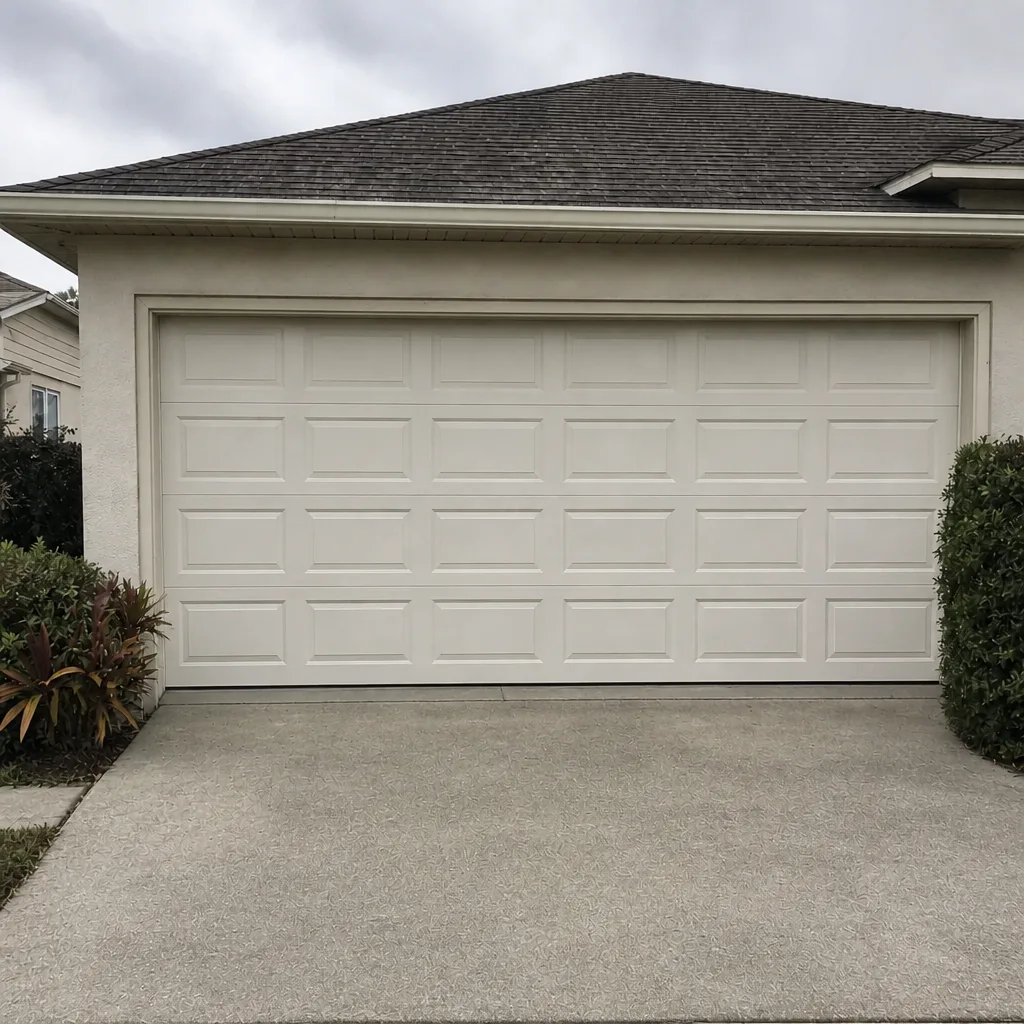 After
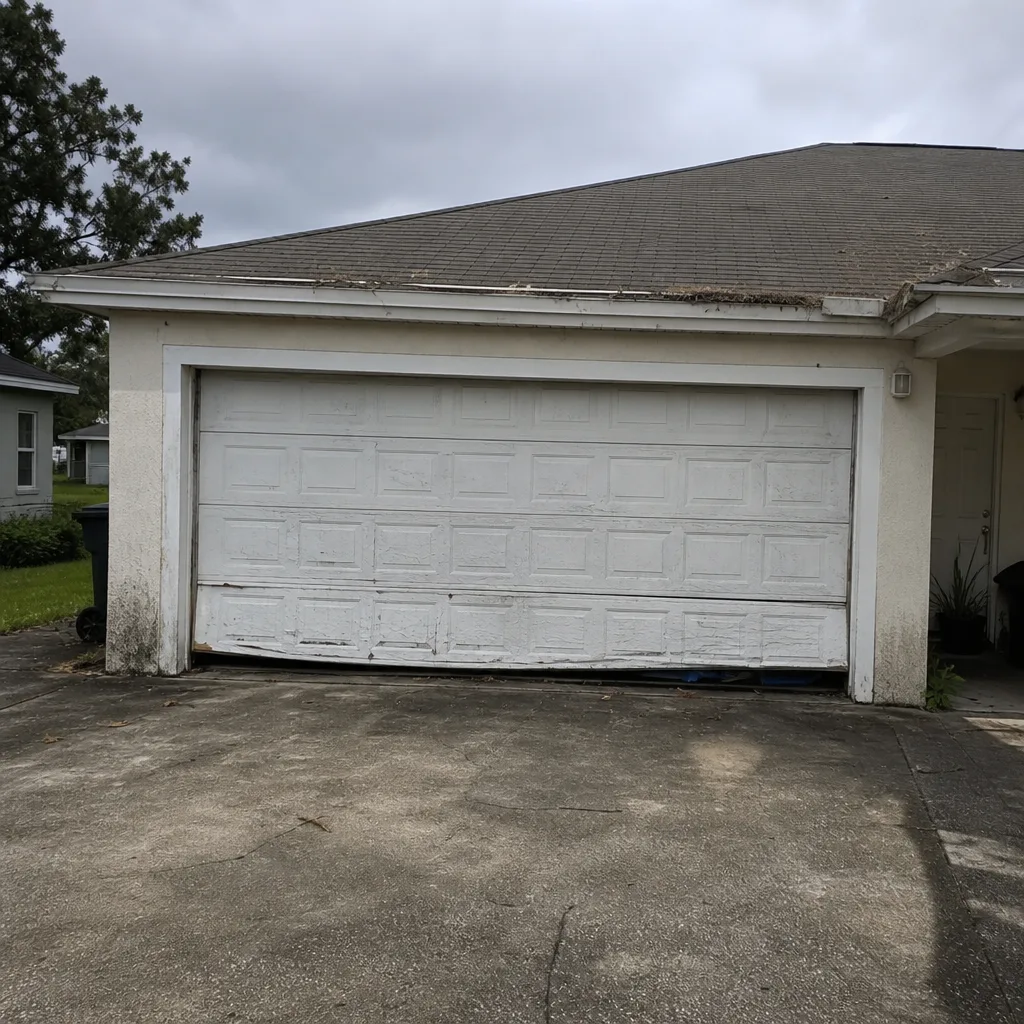 Before
 After
 Before
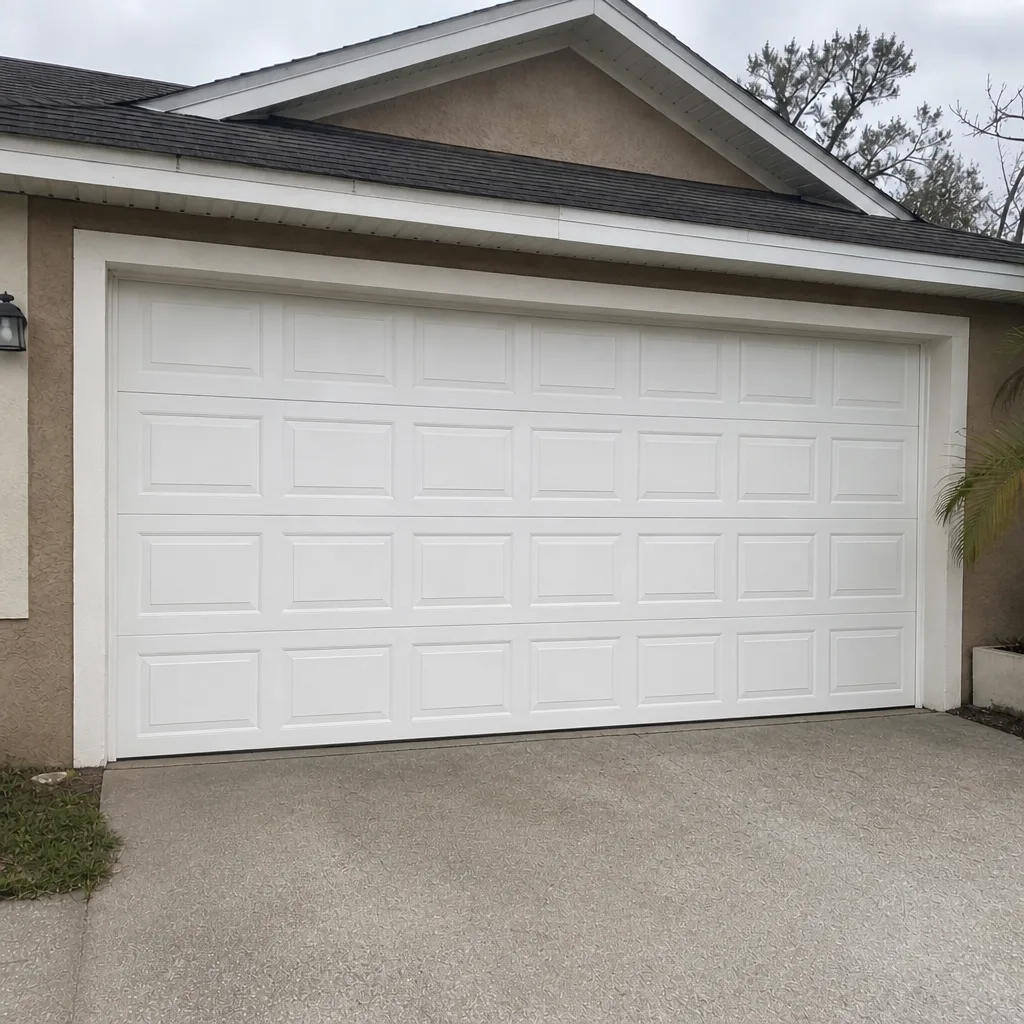 After
When to Call a Professional
Call a professional whenever the door’s counterbalance system is involved: broken or damaged springs, frayed or detached cables, bent drums, or any door that has come off its tracks. Call when the door won’t open at all and your home depends on it as an entry point. Call after any sound like a loud bang from the garage, because that’s the sound of a spring letting go and the door goes down hard without one. Call before any full door or panel replacement, so the permit, sizing, and specs are right the first time. And call when a door has been installed by a previous homeowner and you don’t know if the spring rating is correct. Poinciana Garage Door Repair Co offers free estimates in Poinciana. Call (877) 471-4560. We answer 24/7. Fast dispatch from 7am to 7pm, Sunday through Friday, and if the door is stuck or unsafe, emergency response is on the callout list.
Frequently Asked Questions
No. Torsion and extension springs store enough energy to cause serious injury when released improperly, and there’s no safe homeowner method for winding or unwinding them. This is one of the two or three trades tasks where “do-it-yourself” genuinely isn’t an option, because the risk isn’t a mistake you can undo. Call (877) 471-4560 for a free estimate. We answer 24/7. Fast dispatch from 7am to 7pm, Sunday through Friday.
Lubrication, weather seal replacement, safety sensor cleaning and alignment, keypad and remote programming, and visual inspections are all safe for a careful homeowner. Those tasks share one thing: they leave the counterbalance system alone. Anything that touches the springs, cables, drums, or full door replacement belongs with a trained technician. Call (877) 471-4560 for a spring and cable inspection if you want a professional to verify your door’s condition.
It usually is, because the door is part of the home’s wind envelope. Contact your local building department for the specific requirement at your address, since jurisdictions vary and rules change. Skipping the permit risks insurance coverage for storm damage tied to the unpermitted door, which is a bigger cost than the permit itself. Call (877) 471-4560 if you want a written price before you order a new door.
Signs include a door that feels too heavy or too light at the midpoint, a door that won’t stay at half-open, and an opener that strains or has its force setting cranked way up. Color codes on the spring not matching the door manufacturer’s spec is another tell. A trained technician confirms this quickly during an inspection. Call (877) 471-4560 to book one.
We work on all eight major brands: LiftMaster, Chamberlain, Genie, Clopay, Amarr, Wayne Dalton, Craftsman, and Raynor. That matters because brand familiarity means the technician shows up already knowing your door and opener’s hardware. Recommendations come from what fits your door and budget, not from which brand pays the best referral margin. Call (877) 471-4560 for a free estimate.
No. A door off its tracks is under load from the springs, cables, and its own weight, and trying to lift or reseat it by hand can cause serious injury or make the damage worse. It’s also a security problem the moment the door won’t close. Call (877) 471-4560. Emergency garage door service is part of what we do, and the price is quoted and agreed before any work starts.
The Bottom Line
The garage door DIY question answers itself once you look at the mechanical system. Lubrication, seals, sensors, keypad programming, and visual checks are yours to handle, and handling them well keeps your door running quietly. Springs, cables, drums, and full door replacement are technician-only, because the stored energy in those parts is beyond what homeowners can safely manage. In Poinciana, the permitting piece adds a real reason to keep full door replacement professional: the paper trail matters for insurance. The right routine is DIY maintenance, an annual professional spring and cable inspection, and a call the moment you hear something pop, grind, or bang.
Call (877) 471-4560 for a free estimate. We answer 24/7. Fast dispatch from 7am to 7pm, Sunday through Friday. Whether you need a spring and cable inspection, a repair, or a full written quote on a replacement door, we’ll lay out the price in writing before anything starts.
Written by the team at Poinciana Garage Door Repair Co.