
Last updated November 21, 2026
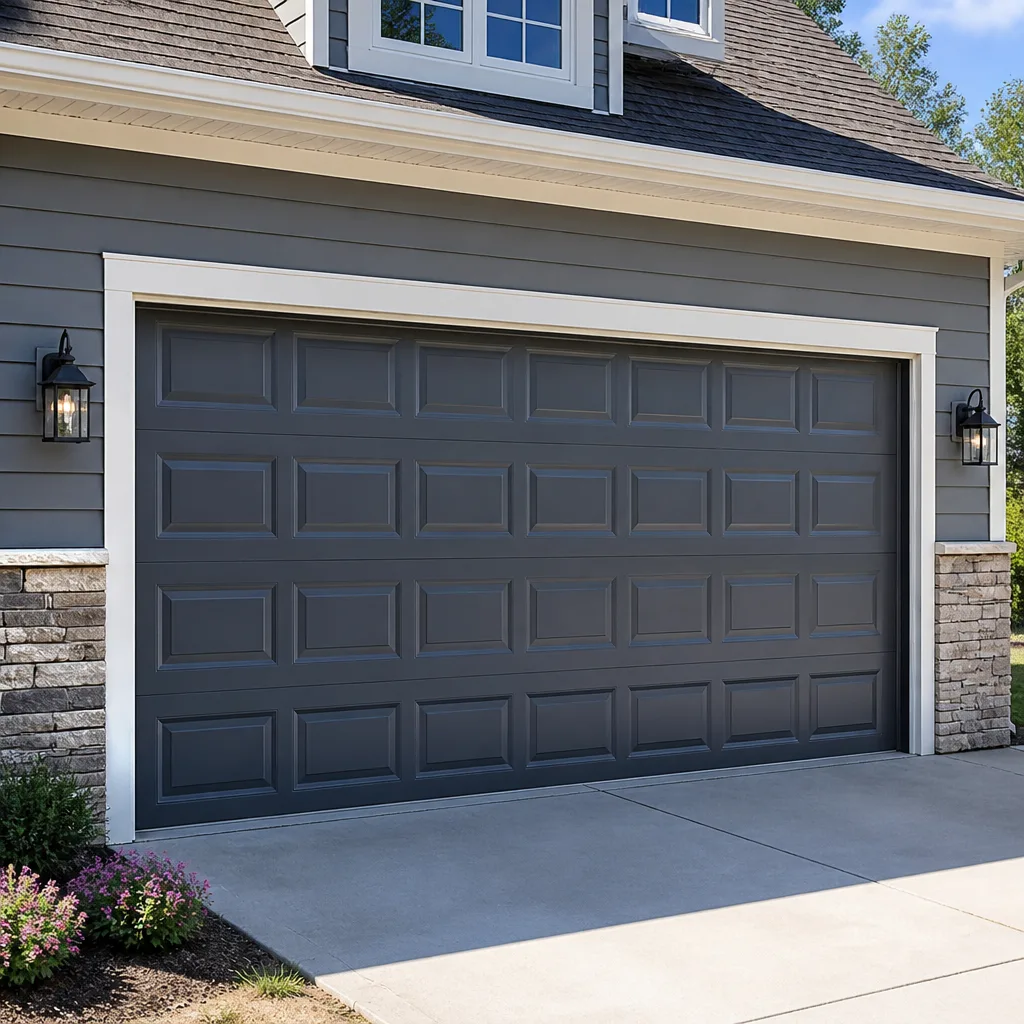 Raised-panel steel
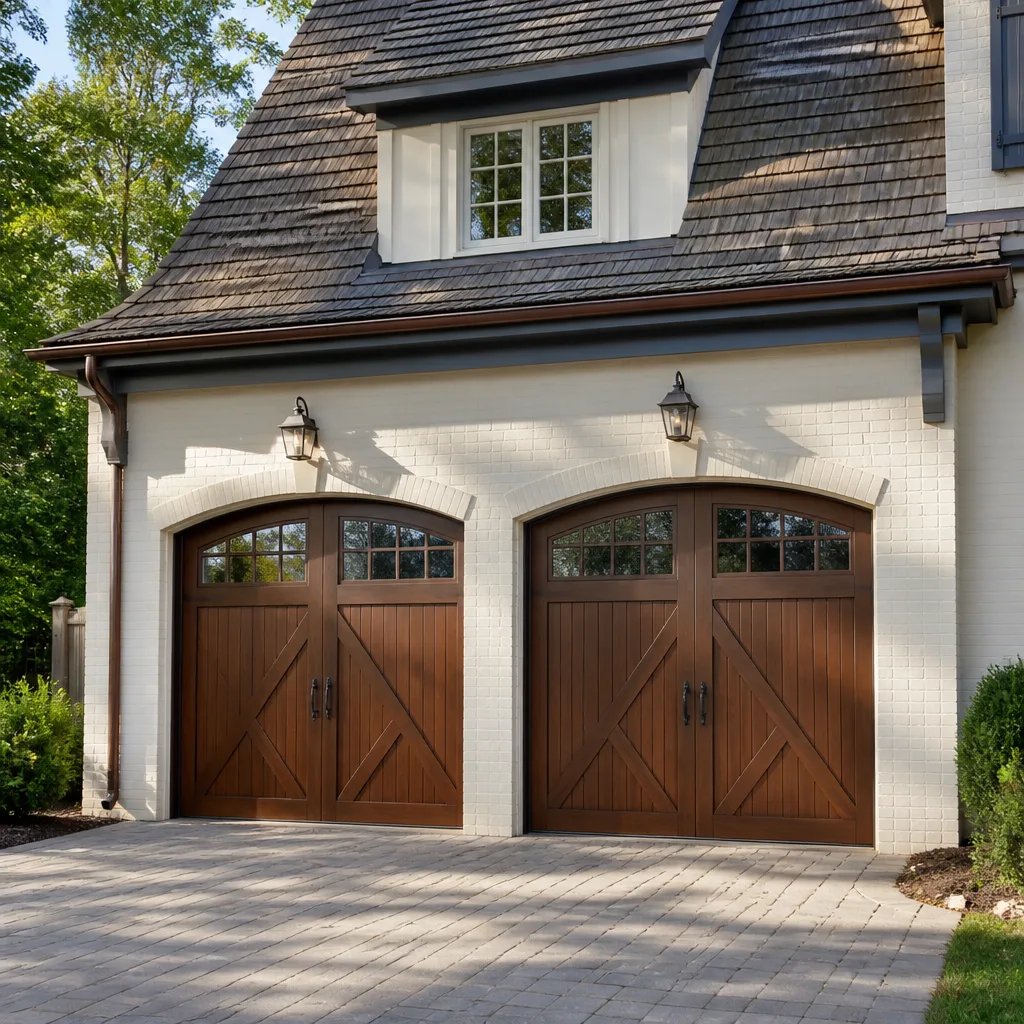 Carriage house
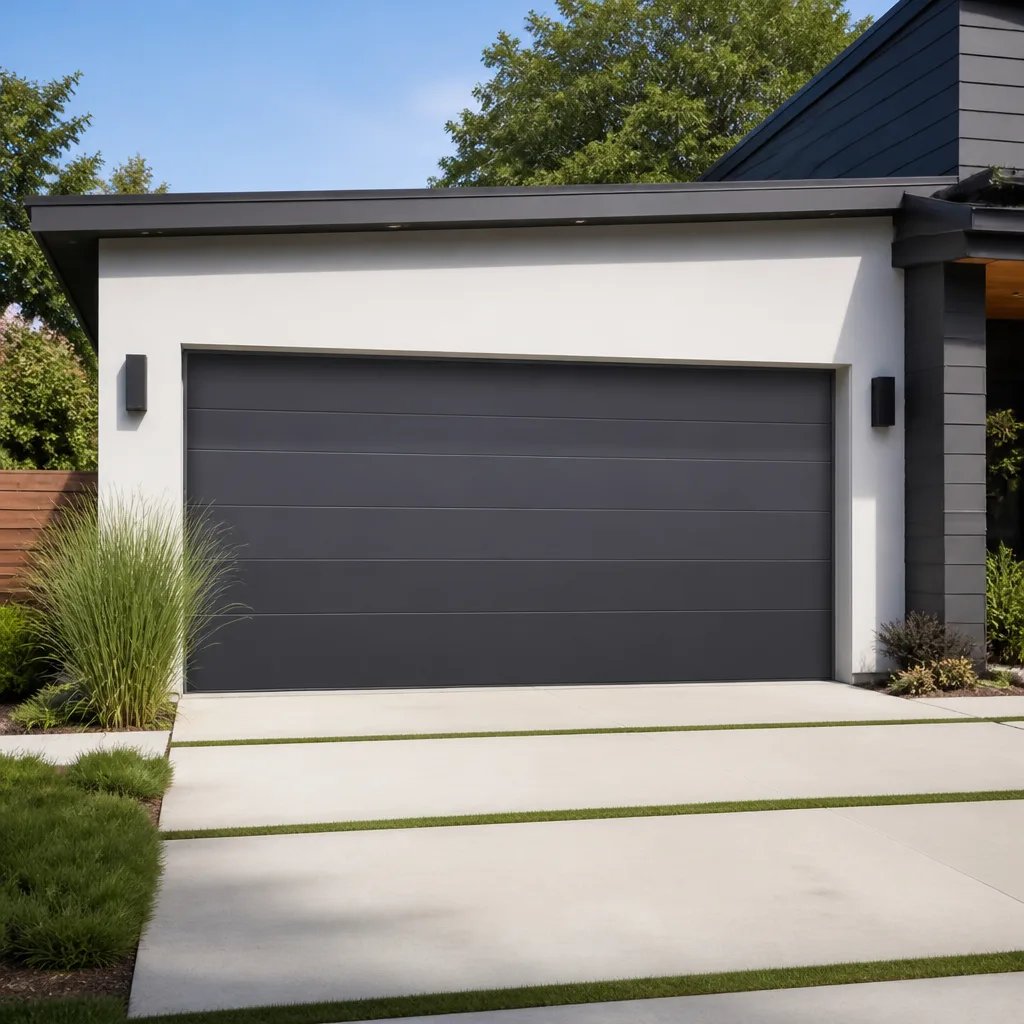 Modern flush
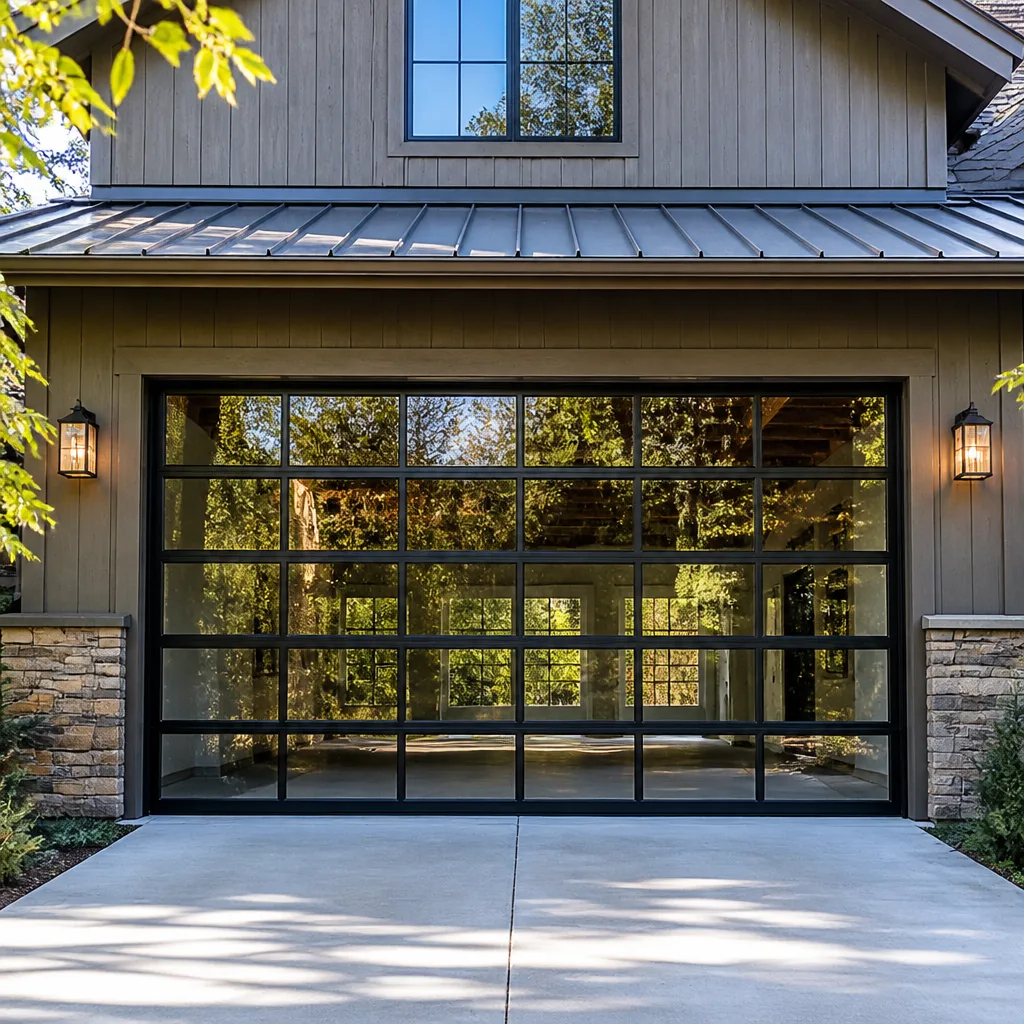 Full-view glass
 LiftMaster openers
 Chamberlain openers
Full 25-point door and opener safety check with every visit - springs, cables, rollers, tracks, and your LiftMaster or Chamberlain opener included
You get a price before we start. It does not change when the pro arrives.
Get your free estimateGarage Door Warning Signs: A Poinciana Homeowner’s Reference Guide
A garage door that shudders on the way up but runs smoothly on the way down isn’t a random quirk. It’s one of the most reliable early signals that a torsion spring has lost calibration and is weeks, not months, from letting go. Most warning signs a garage door gives you are not emergencies at all, and treating every rattle as one leads homeowners to either panic over a $15 roller or ignore a cable that’s about to fail. The trick is knowing which sounds, movements, and marks mean “schedule service” and which mean “stop using the door today.” This guide draws that line for Poinciana homeowners, covering how Florida heat, humidity, and the way homes here are used every single day create their own set of wear patterns. You’ll learn to read your door before it fails on you.
Quick Answer
Most garage door warning signs are routine wear that can wait for a scheduled service visit, but three specific conditions mean you should stop using the door immediately: a visible gap or curl in the torsion spring, a snapped or visibly damaged cable, and a door that reverses before it reaches the floor. Everything else, from a shaky descent to a slow close in summer heat, is usually a sign to book service soon rather than an emergency. When you can’t tell which category you’re in, stopping use of the door until a professional looks at it is always the safe move.
Styles & brands we work with
- Raised-panel steel
- Carriage house
- Modern flush
- Full-view glass
- LiftMaster openers
- Chamberlain openers
Table of Contents
- What the Sounds Are Telling You: Rollers, Tracks, and Springs
- Why Slow Closes in Summer Heat Are Usually Not a Breakdown
- Paint Bubbling on the Bottom Panel: The Moisture Signal
- The Three Warning Signs That Mean Stop Using the Door
- The Balance Test: Self-Triage Before You Call
- Why a Door Shudders Going Up but Not Down
- What Poinciana’s Humidity and Daily Use Do to Door Hardware
- When to Call a Professional
What the Sounds Are Telling You: Rollers, Tracks, and Springs
A garage door is mostly steel and wood panels riding on rollers inside tracks, driven by springs and an opener. Every one of those parts produces a distinct sound when it starts to fail, and trained technicians can often identify the problem over the phone before ever arriving. Learning to distinguish these sounds is the most useful diagnostic skill a homeowner can build.
A roller that needs replacement produces a rhythmic, squeaking or rattling bump at even intervals as the door travels, often louder on one side. The door still opens and closes fully, but the noise repeats at a predictable cadence. That cadence is the giveaway: the roller has a flat spot or a worn bearing, and you’re hearing it rotate past the same point in each cycle.
A loose or misaligned track sounds different. You’ll hear a grinding scrape or a hollow thunk as the door rises and falls, sometimes with a visible wobble in one panel. The sound may change depending on how far the door travels, and you might notice the roller jumping or hesitating. Tracks can drift out of alignment from years of thermal expansion, a bump from a car, or a building settling into sandy soil, which is common throughout Poinciana.
A failing spring has its own profile. It might start as a dull creaking or popping sound that wasn’t there before, or the door may feel like it’s fighting the opener on the way up. If the spring is a torsion system, a persistent metal-on-metal ping or a sudden bang without a snapped coil usually means the spring has lost tension rather than broken outright. That’s the stage where garage door spring repair should be scheduled before the spring fails completely.
Here’s a quick reference for matching sound to part:
- Rhythmic rattle at even intervals – worn roller bearing or flat spot.
- Grinding scrape or hollow thunk, sometimes with panel wobble – loose or misaligned track.
- Creaking, popping, or the door fighting the opener on the way up – spring losing tension.
- Sharp metallic ping followed by the door not lifting at all – broken spring; stop using the door.
- Clicking that repeats in a pattern unrelated to door travel – opener gear or limit switch issue, best diagnosed on a visit.
If a sound doesn’t clearly match one category, it’s not a problem to diagnose from a recording or description alone. A technician can narrow it down during a single visit and often fix a same-day issue in the same trip.
Why Slow Closes in Summer Heat Are Usually Not a Breakdown
Every summer, Poinciana homeowners call us about the same complaint: the door closes more slowly than it used to, or it stops and reverses a foot above the floor, but only on hot afternoons. Very often, nothing is mechanically wrong. This is auto-reverse sensitivity drift, and it’s caused by high temperatures, not worn parts.
Here’s what’s actually happening. Garage door openers rely on a sensing system that reverses the door if it feels resistance. Temperature changes affect the tension of springs, the stiffness of the door’s hinges and seals, and the calibration of the opener’s internal force settings. When the ambient temperature climbs into the high 90s inside an unventilated Florida garage, the safest and most common symptom is an opener that interprets normal resistance as an obstruction and pauses or reverses. The door isn’t broken. It’s just being cautious.
The pattern is easy to test mentally before you call anyone:
- Does the slow close or reversal happen only on hot afternoons, and only after the garage has been closed up?
- Does the door work normally first thing in the morning or after the garage has been open a while?
- Has the door been lubricated recently, and are the hinges and rollers clean?
- Does the door pass the balance test (covered later in this guide) so that a resistance issue is ruled out?
If the answer is yes to those questions, the fix is usually a small adjustment to the opener’s force settings or travel limits, not a new opener. That said, a door that reverses before reaching the floor is also a safety feature doing its job. It could mean the opener is correctly detecting a genuine obstruction. If the reversal is unpredictable, or the door doesn’t close at all, that’s a sign to bring in a technician who can test the door’s balance and the opener’s force calibration against each other before resetting anything. For Genie, Chamberlain, and LiftMaster openers in particular, these adjustments are one of the most common service calls we handle, and the brand on your door changes how the adjustment is performed.
One rule to remember: don’t turn up the opener’s force setting to force a door that’s binding. That’s the equivalent of removing a smoke detector because it keeps going off. It works until it doesn’t.
Paint Bubbling on the Bottom Panel: The Moisture Signal
Every homeowner has driven past a garage door with a strip of peeling paint along the bottom edge. It looks cosmetic. It usually isn’t. Paint bubbling specifically along the bottom panel edge, particularly on wood or composite doors, is the most reliable surface indicator of moisture intrusion behind the door’s skin. Sun causes paint to fade evenly. Moisture causes it to bubble in patches, and it does so along the bottom edge because that’s where water collects.
In Poinciana, the driver is a combination of hard summer rain and persistent summer humidity, which soak into the bottom edge of a door and take days to dry out. Wood-core doors are especially vulnerable, and metal doors with damage-painted bottom panels can hide rust behind cosmetic layers. If a paint bubble is soft to the touch, or the wood feels spongy underneath, the moisture has been there long enough to compromise the panel’s structure. That’s when a repair becomes a panel replacement.
Doors most commonly affected in Poinciana’s climate:
- Wood and wood-core doors, particularly if the bottom seal isn’t intact or has gaps.
- Composite doors with factory-finished surfaces where a scratch has broken the topcoat.
- Metal doors where the bottom edge is exposed or a seal has failed, allowing water to pool in the panel fold.
- Any door where the weatherstrip at the base is worn, torn, or missing.
The fix depends on where the moisture has gotten. If the bubble is surface-level, sanding, sealing, and repainting is often enough. If water has soaked into the core, replacing the bottom panel is generally the practical route, and doing it early prevents a repaint-and-repair loop that returns every year. Clopay and Amarr, both of which build doors engineered against humidity-driven wear, often have panel replacement options available without replacing the whole door.
What this isn’t: it’s not a reason to panic, and it’s rarely an emergency. But it’s a sign the door’s weather seal should be inspected at the same time as the panel itself. A repainted panel behind a failed seal will bubble again on the next rainy season.
The Three Warning Signs That Mean Stop Using the Door
Most warning signs are invitations to schedule service. Three are different. These are signs that the safety of the door’s mechanism has been compromised, and continuing to operate the door risks injury or a much bigger failure. Here they are, in plain language, and why each matters.
1. A visible gap or curl in one of the torsion springs. A torsion spring is the steel coil mounted over the door. When it’s healthy, its coils are evenly wound. If you can see a small gap between two coils, or one coil looks bent or separated from the rest, the spring has lost tension unevenly. Storing that energy unevenly is what causes springs to break with a bang that sounds like a gunshot. A spring at this stage can snap at any point in the door’s travel, and when it does, the door can drop suddenly. Stop using the door and call a technician.
2. A snapped, frayed, or visibly damaged cable. The cables run alongside the door and hold it under tension. A cable that’s frayed, has a kink, or has come off its drum is a serious mechanical concern. Cable failure is dangerous and can cause the door panels to shift or the door to drop without warning. Cables are always under high tension and are never something to inspect by hand or attempt to adjust. Stop using the door.
3. A door that reverses before it reaches the floor, or a door that doesn’t reverse when it should. The auto-reverse feature is the safety mechanism that stops the door if a person, pet, or object is in its path. If the door reverses on its own before reaching the floor, the opener has detected a fault and may not be functioning safely. If the door doesn’t reverse when you test it, that’s more serious. Stop using the door and have the safety system tested and repaired.
Every one of these three is about the door’s ability to move its own weight safely. The door weighs somewhere between a hundred pounds and several hundred pounds, depending on the model and material. If the springs, cables, or safety system that manage that weight are compromised, the door can fail without warning. The reason to stop using it is not that the door will break. It’s that it can drop, and the failure is unpredictable.
If a spring has actually broken, the door may not lift at all, or the opener may try to lift it and stall. That’s a garage door repair situation to solve the same day. Call, and we’ll give you a written price before any work starts.
The Balance Test: Self-Triage Before You Call
Before calling for service, you can run the balance test. It takes about a minute and performs a genuinely useful triage: it tells you whether the door’s springs are doing their job, and whether the movement you’re seeing is a spring problem or a simpler issue like worn rollers or opener settings.
Here’s exactly how to do it:
- Close the door fully and disconnect the opener. The release cord is usually a red or black handle hanging from the opener arm.
- Lift the door with one hand to about waist height and hold it there.
- Let go. The door should stay in place or drift very slightly.
- Evaluate what happens next. If the door stays roughly where you left it, the springs are balanced. If it drops to the floor, springs are under-tensioned. If it rises on its own, they’re over-tensioned.
Do this while standing to the side of the door, never underneath it. If the door slides down hard or feels heavier than you’d expect, let it go and step back. And a warning before you start: on a door with a failing spring, the balance test can cause the door to drop fast, so if you already suspect a spring issue from the section above, don’t run the test at all. Just call.
If the door passes the balance test but still behaves unusually, the issue is likely in the opener, rollers, or safety sensors, which are quicker and safer to diagnose on a visit. If it fails, the springs need adjustment or replacement, and that’s work for a trained technician. Torsion and extension springs are the highest-risk task in the trade, and handling them without the right tools is how serious injuries happen.
Our technicians have up to 9 years of experience with these tests and the brands behind them, so a single visit usually moves straight from diagnosis to the fix.
Why a Door Shudders Going Up but Not Down
The opening shudder is one of the most useful early signals a door can give you, and it’s the one most often dismissed. A garage door that shakes or stumbles on the way up but runs smoothly on the way down is being pulled against gravity with less assistance than it should have. The spring’s job is to counterbalance the door’s weight, and when the spring loses calibration, the opener has to work harder. That extra effort shows up as a shudder specifically on the upward travel, because that’s when the door is heaviest and gravity is working against it.
Several other parts can contribute to an upward-only shudder, and it’s worth knowing which:
- Worn rollers where one side has degraded faster than the other, causing the door to bind on the way up.
- Bent or misaligned tracks where the roller has to ride through a small kink that only shows on the opening cycle.
- Hinge wear that changes the panel’s angle slightly as it rotates.
- Spring calibration loss that leaves the door heavier than the spring was set up to carry.
In our experience across Poinciana, the pattern of “shudders going up, smooth coming down” is the highest-probability sign of a spring that is beginning to fail. It’s usually weeks rather than months before it breaks, and a technician can confirm it in a single visit. If you catch it early, you’re scheduling a spring replacement instead of an emergency call, and the door is still working in the meantime. If you ignore it, you’re likely to hear the bang someday and then face a door that won’t lift at all.
What makes this one tricky is that the shudder is often mild. Homeowners assume a slight rattle is just what an older door does. It isn’t standard operating behavior, and even a small shudder on the opening side is worth a phone call.
What Poinciana’s Humidity and Daily Use Do to Door Hardware
Poinciana’s climate creates a wear pattern that’s different from what most garage door guides describe. High summer temperatures and persistent humidity hit every part of the door, and combined with the way these doors are used in daily life, they accelerate the failure of some components faster than others.
The heat matters most for opener electronics and spring tension. A garage with no airflow can get extremely hot, and every component inside that space sees more thermal cycling than a door in a cooler climate. Auto-reverse sensitivity drift (covered earlier) is the most common summer symptom, followed by opener limit switches that need adjustment. Springs are less directly affected by heat but are affected by the door’s daily wear and by the humidity’s gradual effect on the moving parts around them.
The humidity matters most at the door’s surfaces: the bottom edge, the weather seals, the hinges, and any exposed wood or composite. Paint bubbling along the bottom panel, seals that stiffen and crack, and hinge points that begin to bind are the three most common summer-season issues we see in Poinciana. Cleaning and lubricating hinges, rollers, and the spring coil every few months does more than any single part replacement for the door’s longevity.
Daily use is the third factor. In many Poinciana homes, the garage door is the primary entry door, opening and closing multiple times a day. Every cycle is one more round of wear on springs, rollers, and the opener. A door that’s used as the front door of the house needs service on a schedule that reflects that use rather than waiting for a symptom to get severe. A basic yearly inspection and lube, plus a spring check during the summer, catches most of the common failures before they happen. If you notice a Wayne Dalton or Craftsman door operating more slowly than it used to, that’s the time to look at the opener and spring settings rather than waiting for them to fail.
See the difference
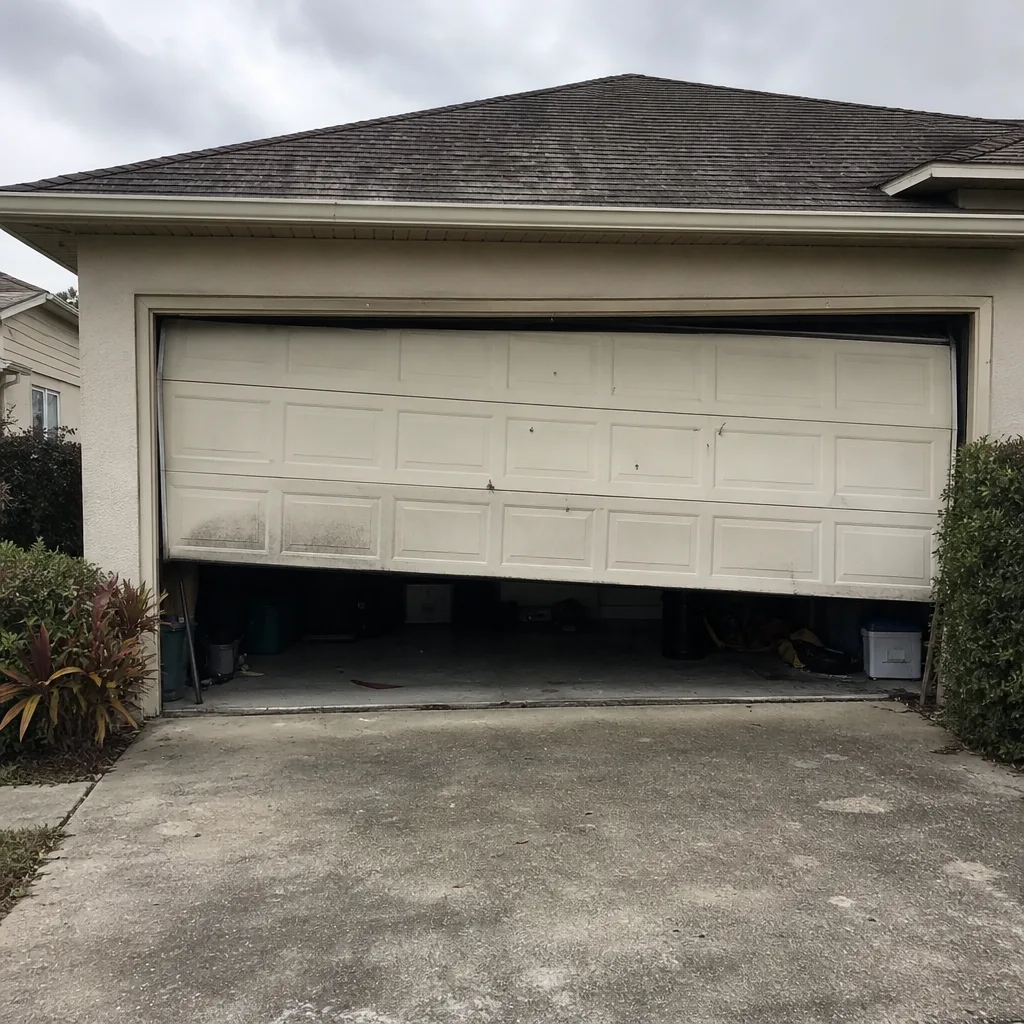 Before
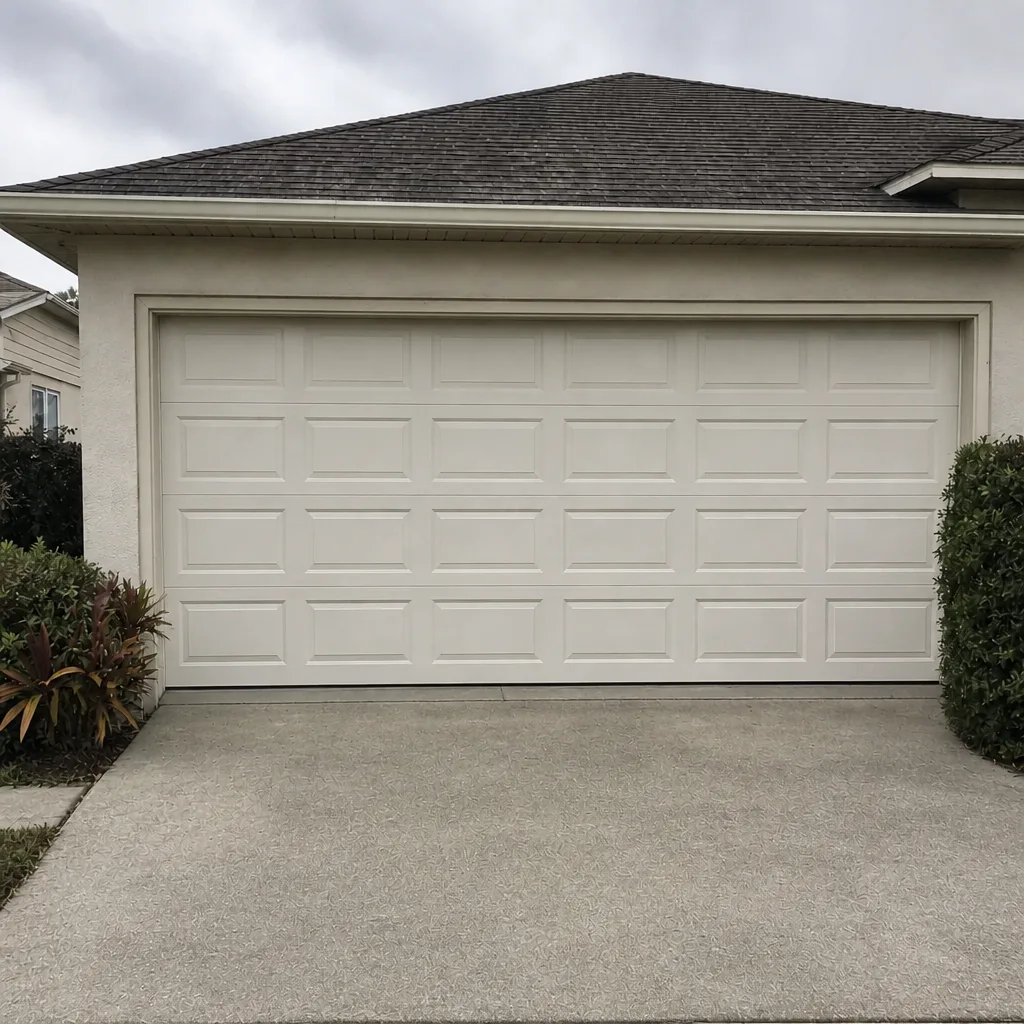 After
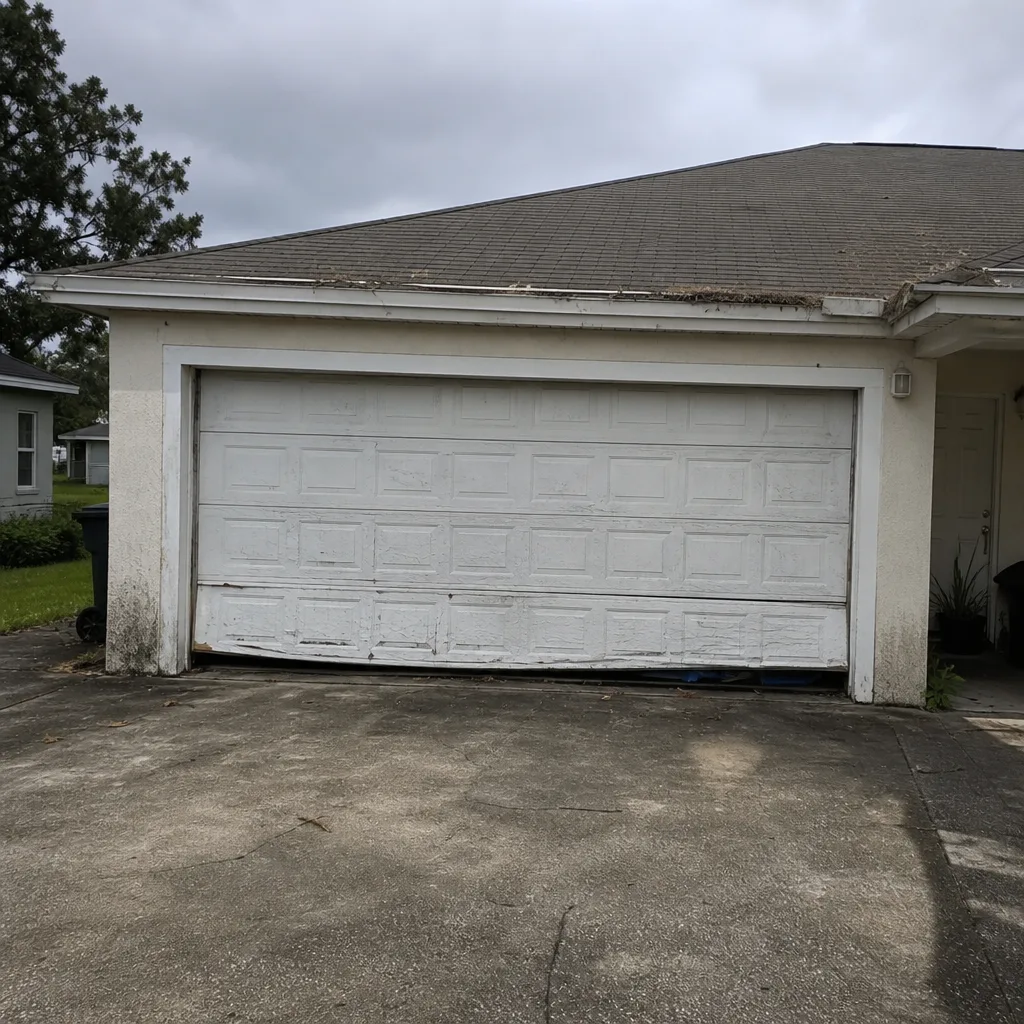 Before
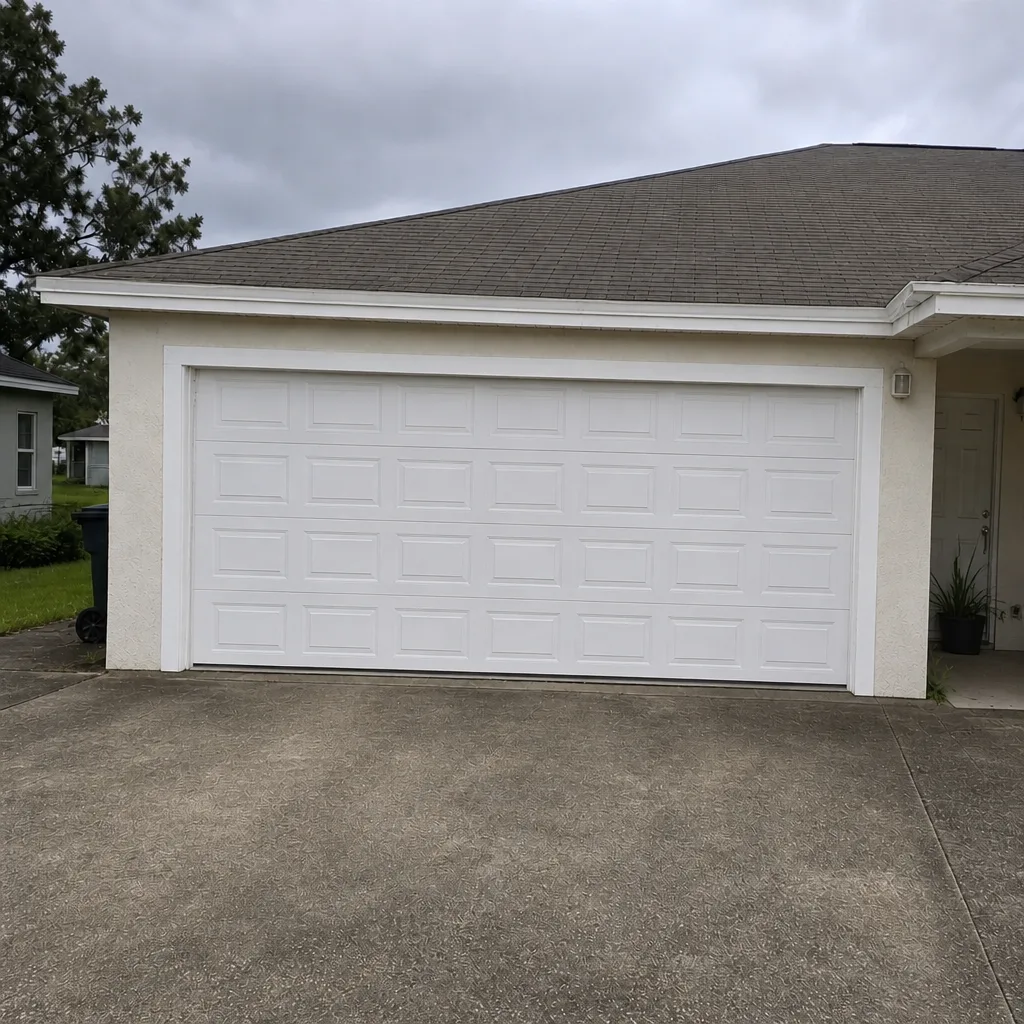 After
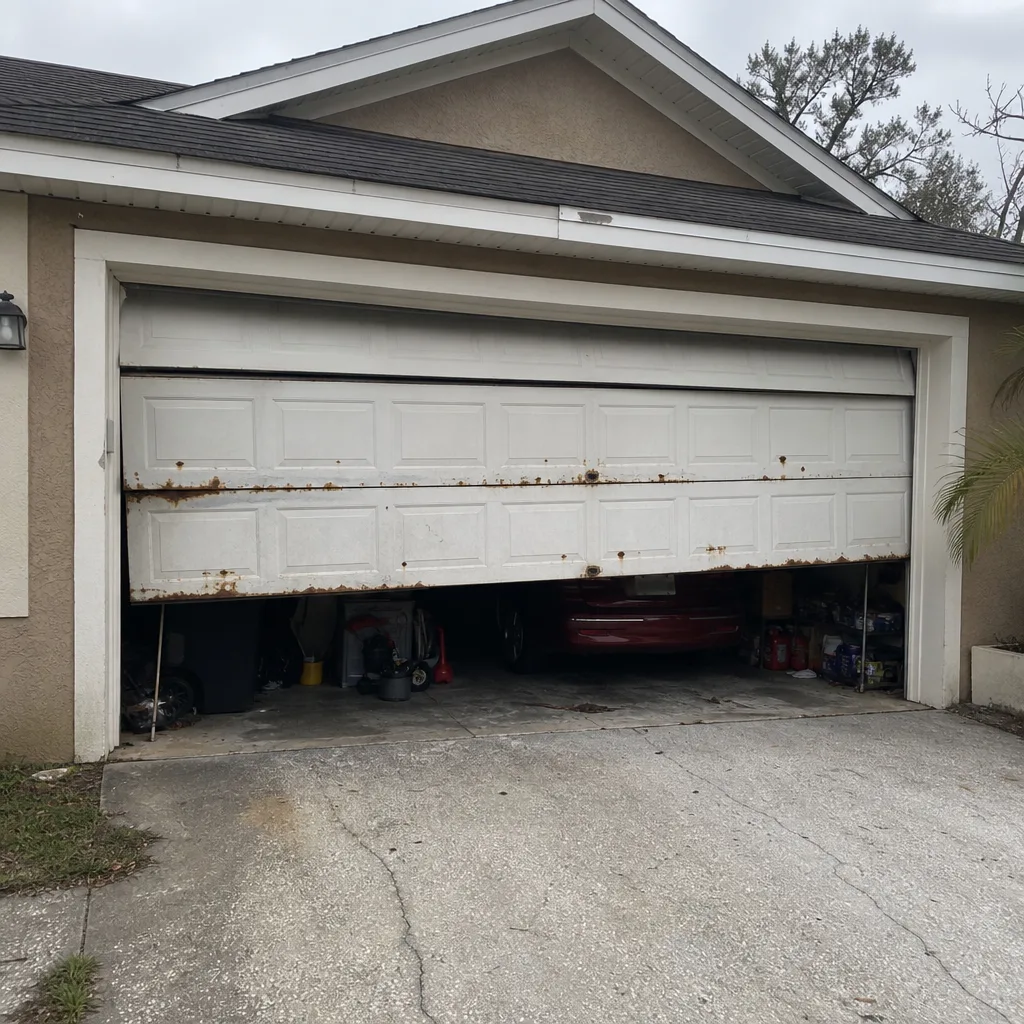 Before
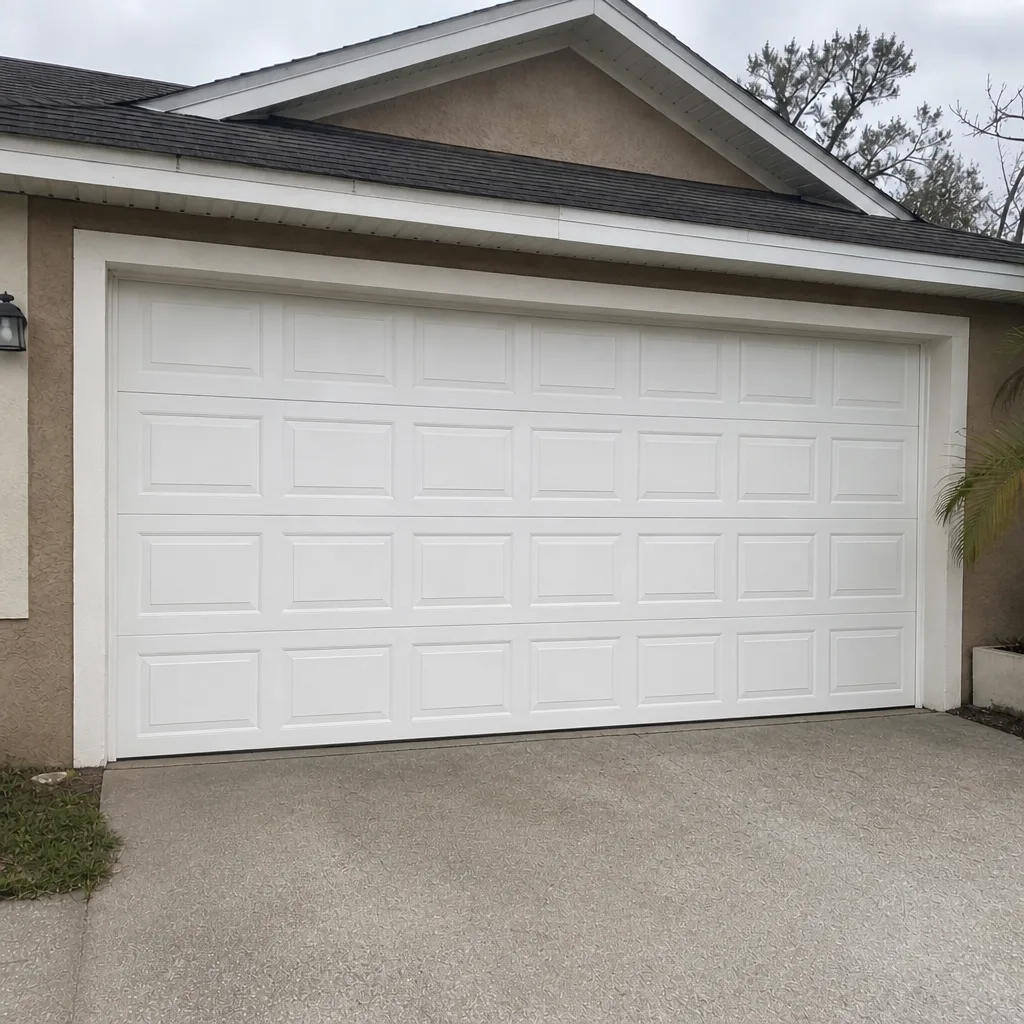 After
Common Mistakes to Avoid
- Treating every sound as an emergency. Rhythmic rattles and hollow thunks are usually worn rollers or tracks, and scheduling a normal service visit is enough. Panicking over a surface-level issue leads to rushed decisions or over-replacement of parts that had years of life left.
- Turning up the opener’s force setting. When a door reverses on its own or struggles to close, the temptation is to override the safety sensor. That removes the feature that protects people and pets, and it’s the single most common cause of a small issue turning into a larger repair.
- Testing the balance test on a suspected spring failure. If the door is shuddering on the way up or the springs look uneven, running the balance test can cause the door to drop quickly. That’s a call-a-technician situation, not a self-diagnostic one.
- Repainting a bubbling bottom panel without fixing the seal. In Poinciana’s humidity, a repaint over an intact moisture source will bubble again on the next rainy season. The seal and the panel need to be addressed together.
- Assuming a slow close in summer is normal for the season. Auto-reverse drift is a real cause, but so is a door that’s actually binding. If the door reverses unpredictably or refuses to close, that’s worth a technician’s visit even in the middle of a heat wave.
- Trying to adjust or replace a spring or cable yourself. Torsion and extension springs are the highest-risk components in the entire door assembly, and cables are held under tension that can cause severe injury. This isn’t a job for homeowner adjustment.
- Skipping lubrication because the door “seems fine.” Poinciana’s humidity gradually stiffens hinge points and rollers. Regular lubrication is the cheapest preventative step and often the one that delays a spring or opener replacement the longest.
When to Call a Professional
Call when the door shows any of the three stop-use signs: a gap or curl in a torsion spring, a snapped or damaged cable, or an auto-reverse failure. Call if the door shudders on the way up, if the paint is bubbling along the bottom panel, or if the door reverses unpredictably in summer heat. Call if the opener struggles, if rollers or tracks are visibly noisy or misaligned, or if the door hasn’t had an inspection in more than a year and it’s your primary entry door. In each of these cases, a same-visit diagnosis keeps a small issue from becoming a large one, and our garage door opener repair and mechanical work covers both the electronics and the springs on one call. Poinciana Garage Door Repair Co offers free estimates in Poinciana. Call (877) 471-4560. We answer 24/7. Fast dispatch from 7am to 7pm, Sunday through Friday.
Frequently Asked Questions
The most reliable early sign is a shudder or stutter on the way up that doesn’t happen on the way down. The door is being lifted against gravity with less spring assistance than it needs, and the opener is compensating by working harder. A dull creaking or popping sound that wasn’t there before is another early signal, and any visible gap between coils means it’s time to stop using the door. Call (877) 471-4560 for a free estimate before the spring fails completely.
It’s usually auto-reverse sensitivity drift caused by high temperatures inside an unventilated garage, not a mechanical breakdown. The opener is reading slightly higher resistance in the summer heat and treating it as an obstruction. If the door closes normally in the morning but slows or reverses on hot afternoons, that’s the classic pattern. If it reverses unpredictably or won’t close, that’s worth a technician’s visit. Call (877) 471-4560 to schedule an inspection.
It’s serious enough to warrant a closer look, because bubbling along the bottom panel edge usually means moisture has gotten behind the door’s skin. Sun fades paint evenly; moisture causes it to bubble in patches. Left alone in Poinciana’s humid climate, a small surface bubble can turn into a rotted panel core. It’s rarely an emergency, but it’s a sign to check the door’s base seal at the same time. Call (877) 471-4560 for a free estimate on the fix.
You can run the balance test safely if the door passes a quick visual check and shows no spring warning signs. The test involves closing the door, disconnecting the opener, lifting the door to waist height, and releasing it while standing to the side, never underneath. If the door drops, rises on its own, or feels heavier than expected, step back. If you already suspect a spring problem from a shudder or a visible gap, don’t run the test. Call (877) 471-4560 and let a technician take it from there.
An inspection and lubrication once a year is a reasonable baseline, and once a year with a spring check during the summer is better for homes where the garage is the primary entry door. Poinciana’s humidity and daily wear accelerate the small stuff: hinges that stiffen, rollers that rattle, seals that crack. A brief yearly look catches these before they compound into a spring or opener problem. Call (877) 471-4560 to schedule one.
Yes. We work on the brand already on your door, including LiftMaster, Chamberlain, Genie, Clopay, Amarr, Wayne Dalton, Craftsman, and Raynor. That means the technician arrives familiar with the exact hardware on your home and the way that brand handles adjustments and repairs. Whether the issue is a Poinciana Garage Door Repair Co technician’s spring, opener, or panel work, recommendations come from what fits your door and budget. Call (877) 471-4560 for a free estimate.
The Bottom Line
Most garage door warning signs are routine, and the worst response is to ignore them until they become urgent. A shudder on the way up, bubbling paint on the bottom panel, a slow close in summer heat, a new rattle at even intervals: these are all signals to schedule service rather than panic. But three signs change the picture. A gap or curl in a torsion spring, a snapped or damaged cable, and an auto-reverse failure all mean stop using the door and call. The balance test tells you which side of that line you’re on, and a yearly inspection through Poinciana’s humid summers keeps a small issue from becoming an emergency.
If you’ve spotted a warning sign and aren’t sure which category it falls into, call (877) 471-4560 for a free estimate. We answer 24/7. Fast dispatch from 7am to 7pm, Sunday through Friday. Springs, openers, panels, full doors – one call covers it, with the price agreed before any work starts.
Written by the team at Poinciana Garage Door Repair Co.