
Last updated November 21, 2026
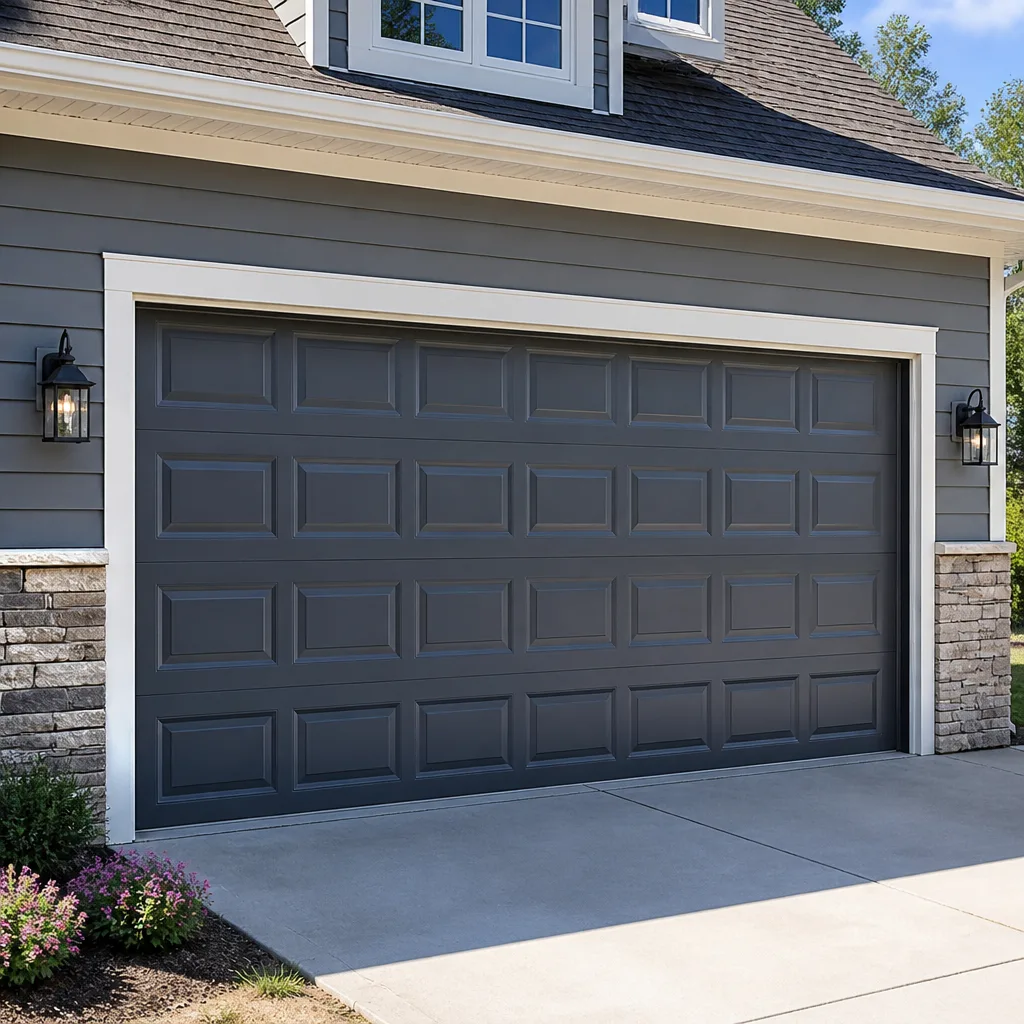 Raised-panel steel
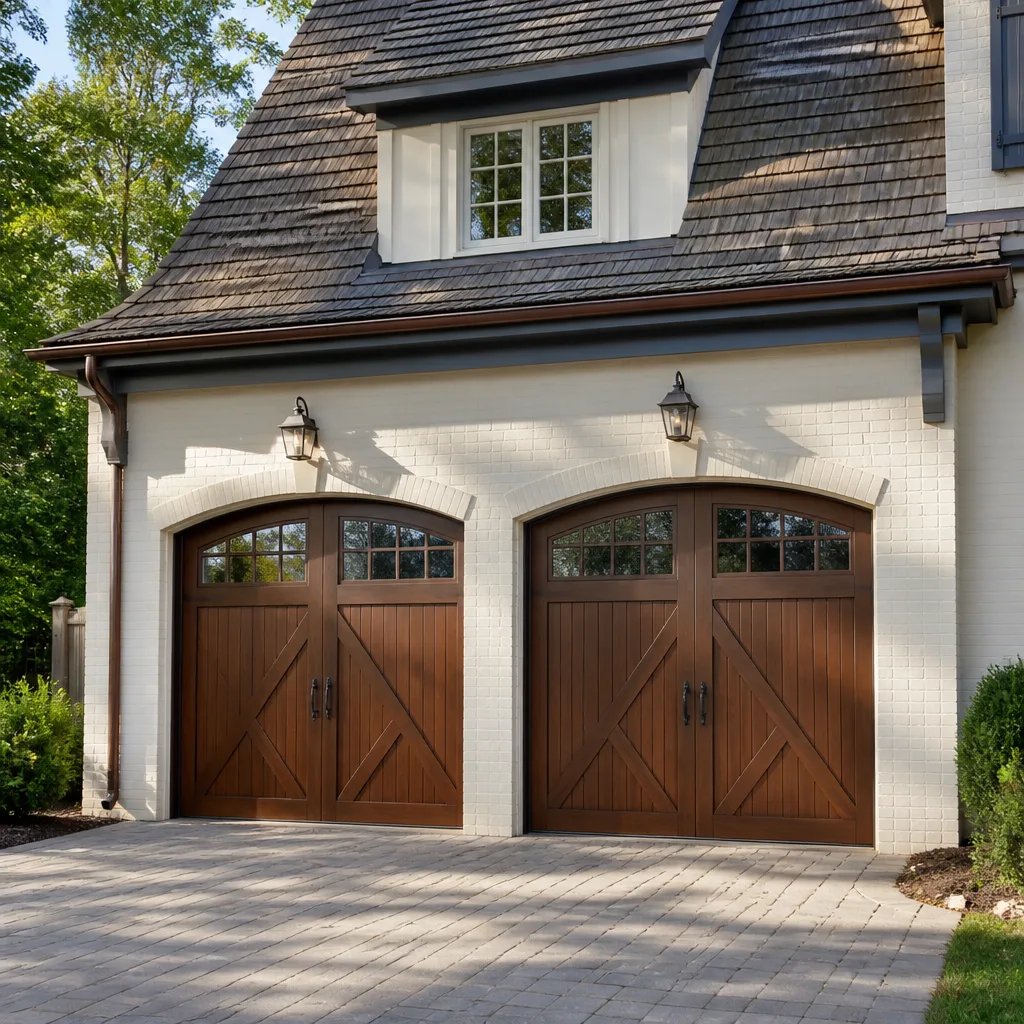 Carriage house
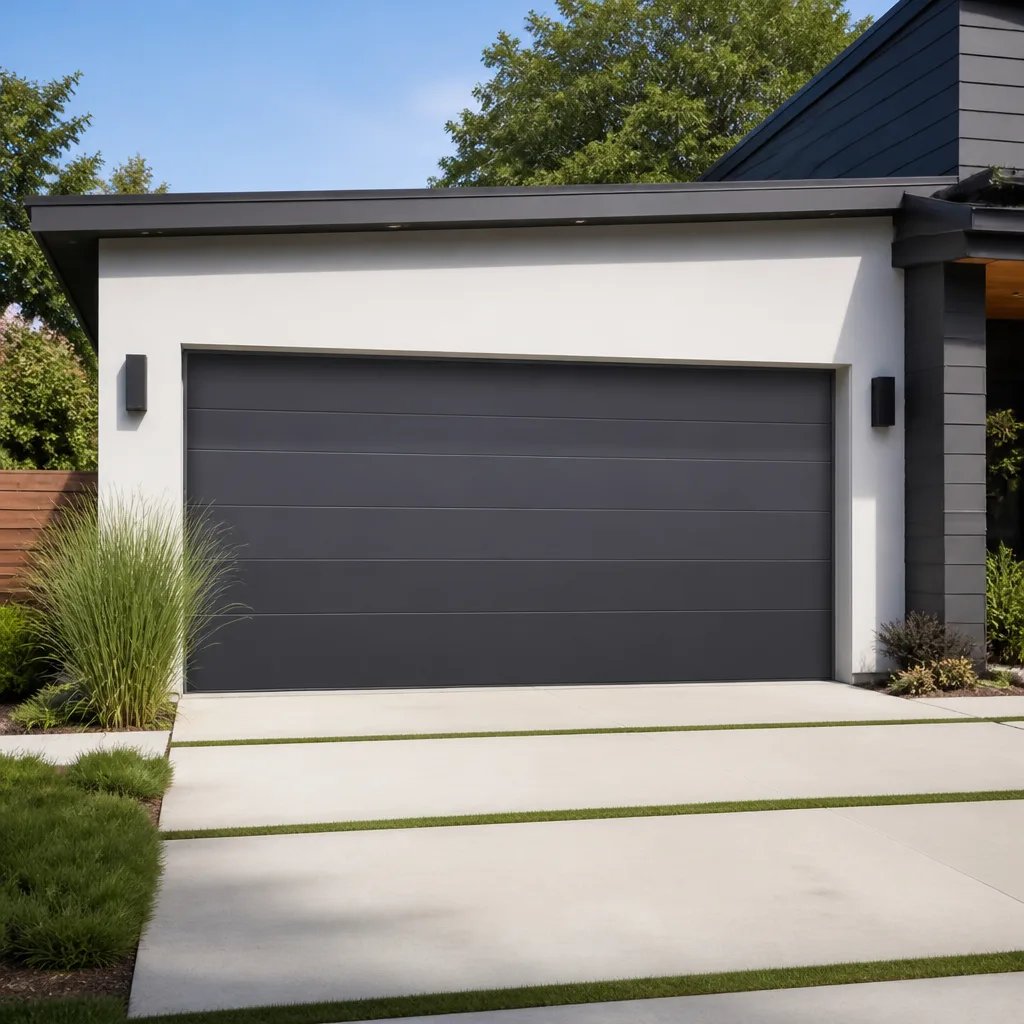 Modern flush
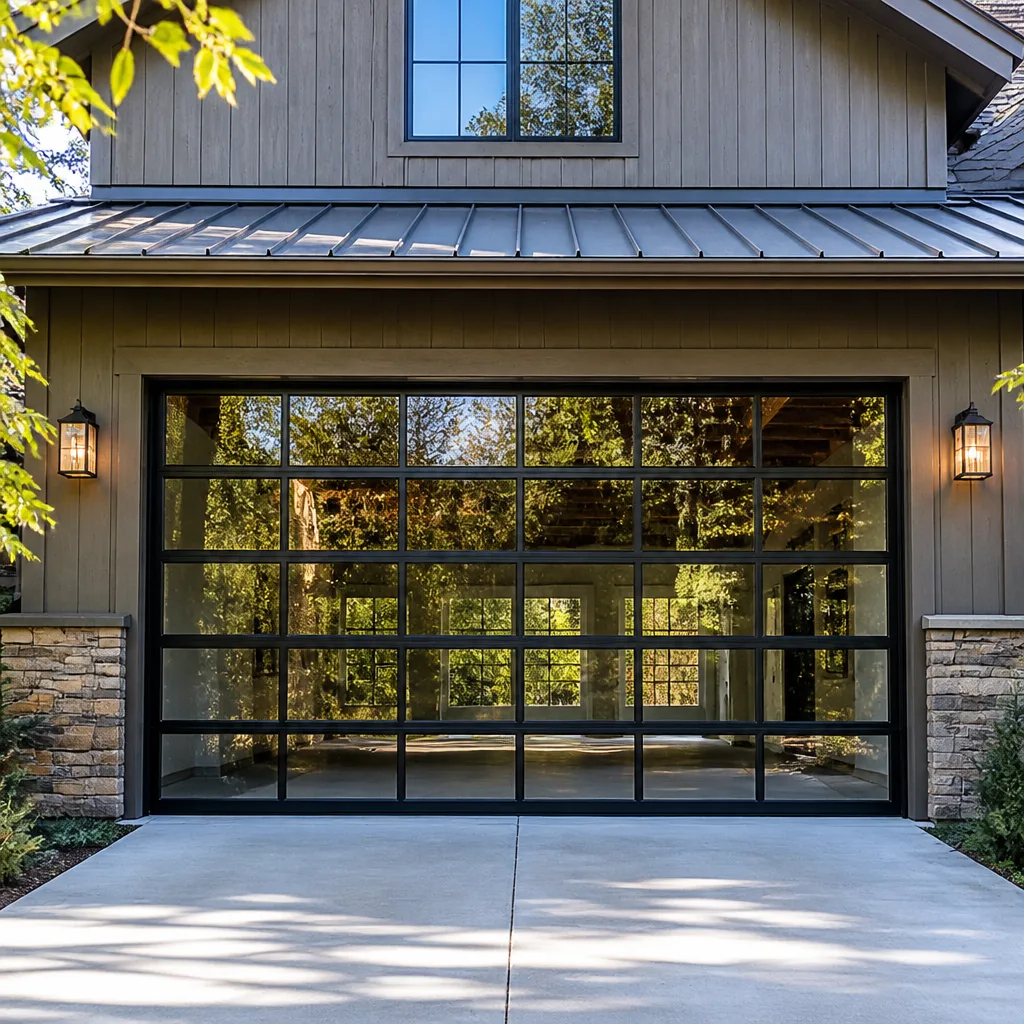 Full-view glass
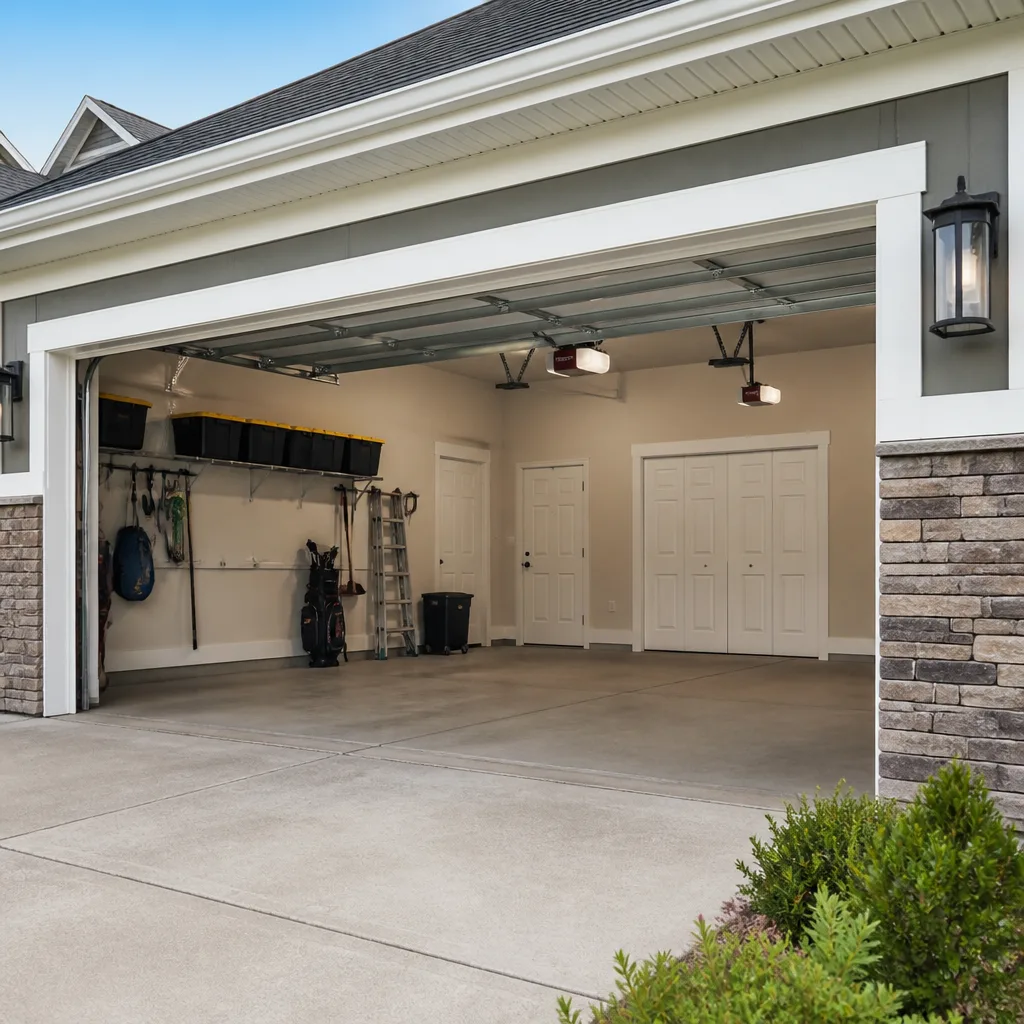 LiftMaster openers
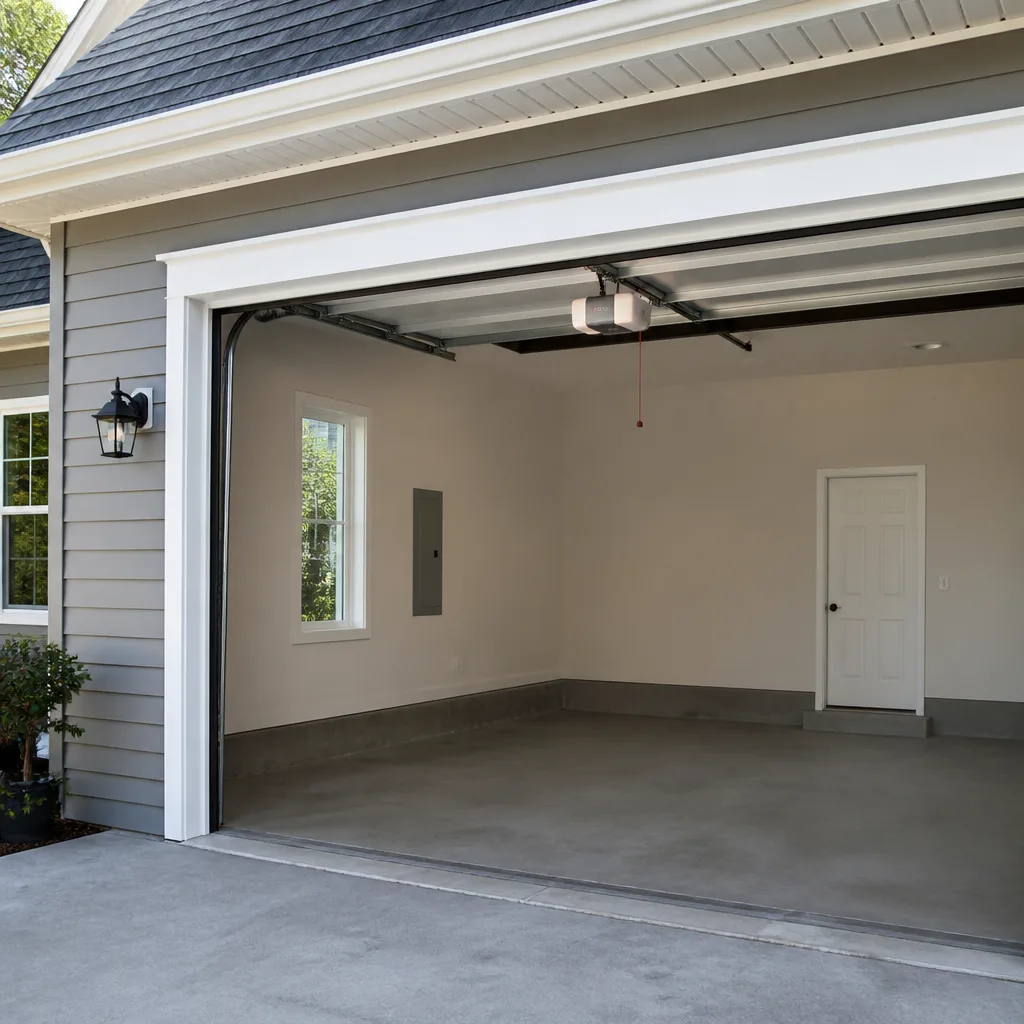 Chamberlain openers
Full 25-point door and opener safety check with every visit - springs, cables, rollers, tracks, and your LiftMaster or Chamberlain opener included
You get a price before we start. It does not change when the pro arrives.
Get your free estimateGarage Door Repair Troubleshooting in Poinciana: Common Problems and How to Fix Them
A garage door has at least seven independent components that can each cause the exact same symptom: a door that refuses to open. That’s the part most homeowners miss. You see a dead door, you assume the opener is shot, and you start pricing a new motor. But the opener may be fine. The problem could be a snapped spring, a cable drum that’s come off its winding, a bent track, or a safety sensor knocked out of alignment by a recycling bin. Guessing wrong costs you a service call and, on spring and cable systems, it can get you hurt. This guide walks through how the whole door works together so you can read the symptom, narrow the cause, and know the exact point to stop and call a technician. We work on garage doors across Poinciana, FL every week, and these are the failures we see most.
Quick Answer
Most garage door problems in Poinciana come down to five causes: broken torsion or extension springs, cables that have jumped a drum or snapped, openers with stripped gears or dead logic boards, tracks bent or out of alignment, and safety sensors that are dirty or misaligned. You can safely diagnose the first layer yourself with a visual check and a manual release test. Any repair that involves springs, cables, or the high-tension side of the system should go to a trained technician, because those components store enough force to cause serious injury.
Styles & brands we work with
- Raised-panel steel
- Carriage house
- Modern flush
- Full-view glass
- LiftMaster openers
- Chamberlain openers
Table of Contents
- How a garage door system actually works
- The symptom-to-cause matrix: what your door is telling you
- Broken spring, stripped drum, or failing opener?
- Safe checks you can do yourself
- How Florida heat and humidity affect your door
- Hard water, irrigation overspray, and corroded brackets
- Common mistakes to avoid
- The decision tree: fix it, repair it, or replace it
How a garage door system actually works
Before you can troubleshoot, you need the mental model. A residential garage door isn’t one machine. It’s a set of systems that all have to work together, and if any one of them fails, the door stops moving or moves badly.
Here’s the breakdown:
- Springs – torsion springs sit on a shaft above the door; extension springs run alongside the tracks. Either type does the heavy lifting, counterbalancing the door’s weight so a person (or a motor) can move it easily.
- Cables and drums – the cables run from the bottom corners of the door up and around drums on the spring shaft. They transfer the spring’s force to the door.
- Hinges and rollers – the door rides on rollers that travel inside the track. Hinges connect the sections.
- Tracks – vertical tracks guide the door up; horizontal tracks carry it back along the ceiling.
- The opener – motor, rail, trolley, and drive system. It pulls the door open and pushes it closed, but it isn’t lifting the full weight. The springs are.
- Safety sensors and the safety reverse – the photo-eye pair at the floor of the opening and the pressure sensor in the opener.
- The bottom bracket and bottom seal – the bracket anchors the cable, and the seal keeps out water, pests, and yard debris.
When a door won’t open, the failure is somewhere in that chain. In our experience across Poinciana, the spring is the most common culprit. But we’ve walked up to plenty of doors with a perfectly good spring where the cable had come off the drum, or where the logic board on a Chamberlain opener had failed. Knowing how the parts relate to each other is what turns a guess into a diagnosis.
The symptom-to-cause matrix: what your door is telling you
This is the fastest way to narrow a problem. Match what you see or hear to what’s likely happening, and you’ll know whether it’s a homeowner check or a technician job.
- Door won’t move at all and you hear a hum from the opener: likely a broken spring, a seized roller, or a stripped opener gear. The motor is trying but can’t lift the dead weight.
- Door opens a foot then reverses: usually a safety sensor misalignment or an obstruction in the photo-eye beam, or a travel limit set wrong.
- Door closes then immediately reverses: something is triggering the safety reverse – often a warped bottom seal, debris in the track, or a sensor pointed at a reflection.
- Door moves crooked, one side lagging: a snapped cable, a cable off its drum, or one spring broken on a two-spring system.
- Grinding or scraping noise: worn rollers, dry hinges, or a track that’s been pushed out of alignment.
- Loud bang from the ceiling, door then won’t open: a torsion spring has snapped. The bang is the spring releasing stored energy.
- Door opens fine but closes hard, or bounces at the bottom: the door is out of balance or the close limit is off.
- Opener runs but doesn’t engage the door: the trolley has been disconnected from the carriage, or the emergency release was pulled and never re-set.
That last one catches people off guard. If the door was ever opened by hand during a power outage and the release cord pulled, the trolley and door stay disconnected until someone re-engages them. It’s a common reason a perfectly healthy door “stops working” overnight. For a full walkthrough of the repair side, see our garage door repair page.
Broken spring, stripped drum, or failing opener?
The hardest call is the one where the door won’t move at all. Three different failures look nearly identical from the driveway, and the repair cost and safety risk differ sharply. Here’s how to tell them apart.
Broken spring. Look at the torsion spring above the door – a clean gap in the coil is the tell. On extension springs, look for a spring stretched out of shape or a separated loop. A broken spring means the door is dead weight. The opener can’t lift it. Don’t force it.
Stripped cable drum or snapped cable. The cables hang slack or one is draped off the drum. The spring may look intact. The door leans because one side is no longer supported. This is a high-tension failure and not a homeowner repair – the cable is under the same spring force as the door itself.
Failing opener motor. The spring looks fine, the cables are tight, the door balances by hand when released. But the motor runs without moving the door, grinds, or trips its overload. That’s an opener problem, and the diagnosis depends on the unit. We work on the brand already on your door – Chamberlain, Genie, LiftMaster, and the rest – so the technician arrives knowing the hardware, not guessing at it. Our garage door opener repair page covers the common opener failures in more depth.
One more thing: spring work is the highest-risk task in the trade. Torsion springs hold hundreds of pounds of stored tension, and a single wrong turn on a winding bar can break a wrist or worse. If the spring is the culprit, that’s the stopping point. Our garage door spring repair page explains the process and why it’s a technician job.
Safe checks you can do yourself
There’s a lot you can verify safely before you call anyone, and doing these checks actually helps the technician pinpoint the problem faster. Here are the ones we recommend, in the order to do them.
- Visual inspection with the door closed. From inside, look at the springs for gaps or stretched coils, the cables for slack, the tracks for bends, and the brackets for rust or loose bolts. Don’t touch anything – just look.
- Test the safety sensors. Wave an object across the photo-eye beam at the floor of the opening. If the opener’s light blinks instead of letting the door close, the sensors are dirty, misaligned, or blocked. Clean the lenses and re-aim them.
- Try the manual release test. Pull the red release cord to disconnect the door from the opener. Lift the door by hand to about waist height. A properly balanced door should stay there on its own. If it slams down when you let go, the spring system is failing – stop and call.
- Look at the opener. Is it getting power? Does its light work? Are the travel limits set? A lot of “dead opener” calls are actually a tripped breaker or a sensor that’s been out of line for weeks.
- Check the outlet and door edge. A simple visual for the opener’s power source, and whether the bottom seal is warped or torn – both quick, safe checks.
That’s where safe DIY ends. The moment you’re looking at a spring, a cable, or a winding drum, stop. The next step is a phone call, not a screwdriver. For a broader look at the components and how they wear, our main page at Poinciana Garage Door Repair Co lays out the full scope of what we handle.
How Florida heat and humidity affect your door
Poinciana sits inland in Osceola and Polk counties, where summers are long, humid, and hot. That climate stresses a garage door in ways a homeowner in a drier part of the country never deals with, and it shapes where we spend most of our troubleshooting time.
The two climate pressures we see most:
- Humidity and warped tracks. Sustained humidity and the wet heat of a central Florida summer can cause wooden components to swell and metal tracks to move out of alignment over time. When a track bends slightly, the rollers start to bind and the door jerks as it travels. It’s a slow failure that looks sudden.
- Heat-cycled springs and openers. Metal expands and contracts with temperature swings. Torsion springs under constant tension in a hot garage work harder, and their break rate is higher in summer. Openers running in a hot, humid garage can also overheat or corrode internally, especially older units without sealed boards.
One more pressure that’s specific to Poinciana: irrigation overspray and hard water. If your sprinkler heads point anywhere near the garage door, overspray lands on the bottom bracket, the bottom seal, and the lower panels. Over time, hard water leaves mineral deposits and the bottom bracket corrodes faster than it would in a drier climate. That corrosion weakens the anchor point where the cable terminates, which is a genuine safety concern on a door that’s already under spring tension.
We’re not suggesting you rip out your sprinklers. Just aim the heads away from the door and hose the bottom section down after a heavy rain if you’re seeing mineral spotting. Small habits add up. If you’re noticing corrosion in the lower corner, that’s a good time to have a technician look at the bottom bracket and cable end, not to replace them yourself.
Hard water, irrigation overspray, and corroded brackets
This one deserves its own section because it’s the failure mode most Poinciana homeowners never connect to their garage door until it’s too late. The bottom bracket is a small, heavy-gauge steel piece that bolts through the bottom section of the door. The cable terminates in it. When it’s sound, it holds the cable end securely and manages the load from the spring. When it’s corroded, it’s the weak link.
What pushes that corrosion in Poinciana specifically:
- Irrigation overspray from lawn heads aimed too close to the driveway, which lays a fine mineral spray on the bottom bracket every morning.
- Hard water – Poinciana’s water leaves deposits. When those deposits sit on the bracket and around the bolts, they hold moisture and accelerate rust.
- Summer humidity, which keeps the whole assembly damp inside a garage that’s shaded most of the day.
If you see white mineral crust or dark rust at the bottom bracket, or if the bottom seal looks warped and water-stained, that’s worth a professional look. A failing bottom bracket isn’t a cosmetic issue. It’s a load-bearing part of the cable system.
Common Mistakes to Avoid
- Assuming the opener is broken when the spring has failed. This is the most expensive mistake we see. The motor runs, so it must be the problem, right? No. A dead spring makes a healthy opener look broken. Confirm the spring first before you price a new motor.
- Forcing a stuck door instead of releasing it. If the door won’t budge, don’t keep hitting the button or pulling the door by hand. A hung-up door under spring tension can bend a track or snap a cable suddenly. Disconnect it at the release cord and leave it.
- Ignoring a loud bang from the ceiling. A torsion spring doesn’t wear out slowly and announce itself. It snaps with a sharp bang, often in the morning when the door is first used. If you hear it and the door then won’t open, that’s a broken spring. Call for repair, don’t run the opener.
- Pulling the manual release and not knowing how to re-engage it. If the door doesn’t reconnect cleanly after a power outage, the trolley and carriage can stay disconnected. Most people don’t know how to re-set it, and the door “stops working” for days. A quick call can save you the confusion.
- Letting irrigation overspray run onto the door all summer. In Poinciana’s climate, that overspray puts hard-water minerals and constant moisture on the bottom bracket. Aim the sprinkler heads away from the door before the corrosion starts.
- Trying to adjust or replace a torsion spring without training. This is the single most common way a homeowner ends up in the emergency room. Springs store enough energy to cause serious injury. No guide, no video, no forum thread is a substitute for the winding bars and the training.
- Skipping the balance test after any repair. After a spring or cable repair, the door needs to be balanced and the opener’s travel limits re-set. If that step is skipped, the door may work for a week and then start binding or reversing. Always test.
Each of these mistakes has one simple backup: a trained technician who knows the whole system. We’ve seen doors that were diagnosed as “needs a new opener” by a well-meaning homeowner and turned out to be a $5 sensor problem. Reading the whole door, not just the symptom, is the difference.
See the difference
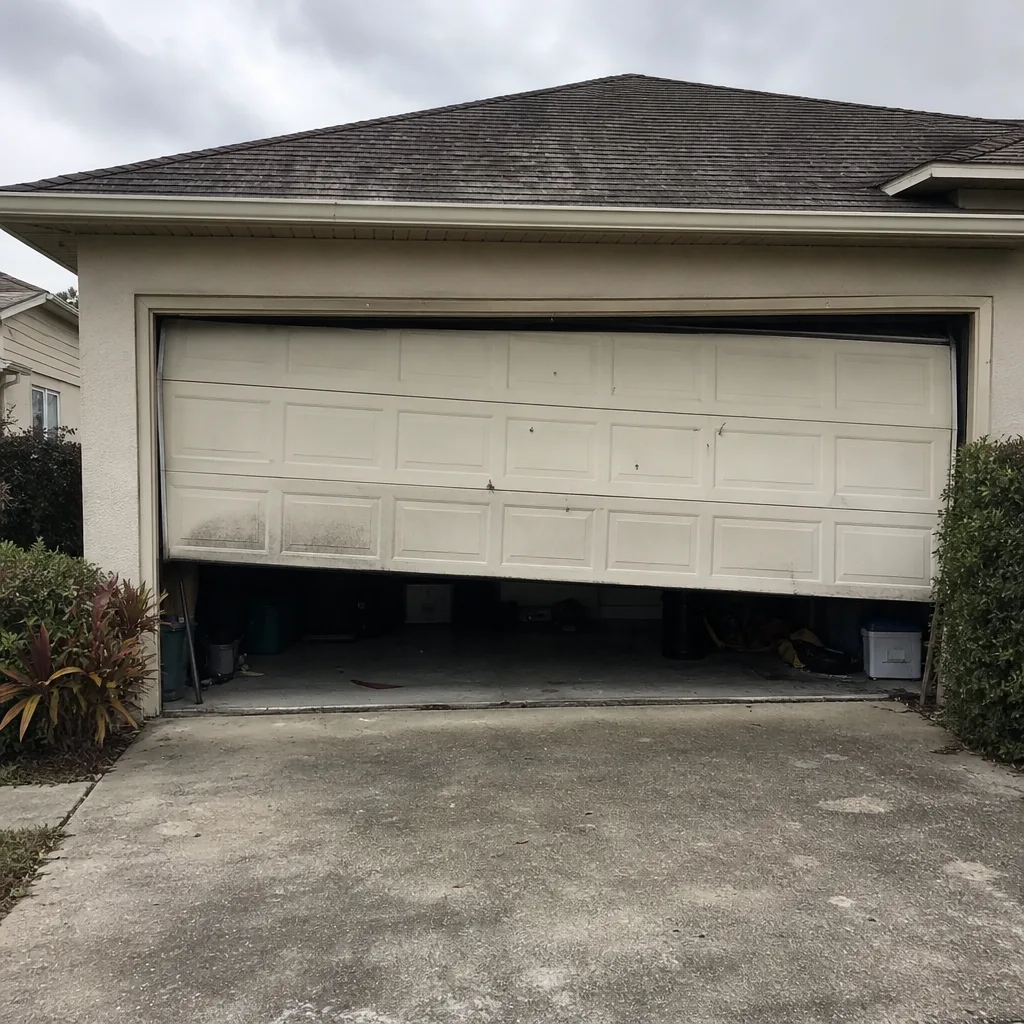 Before
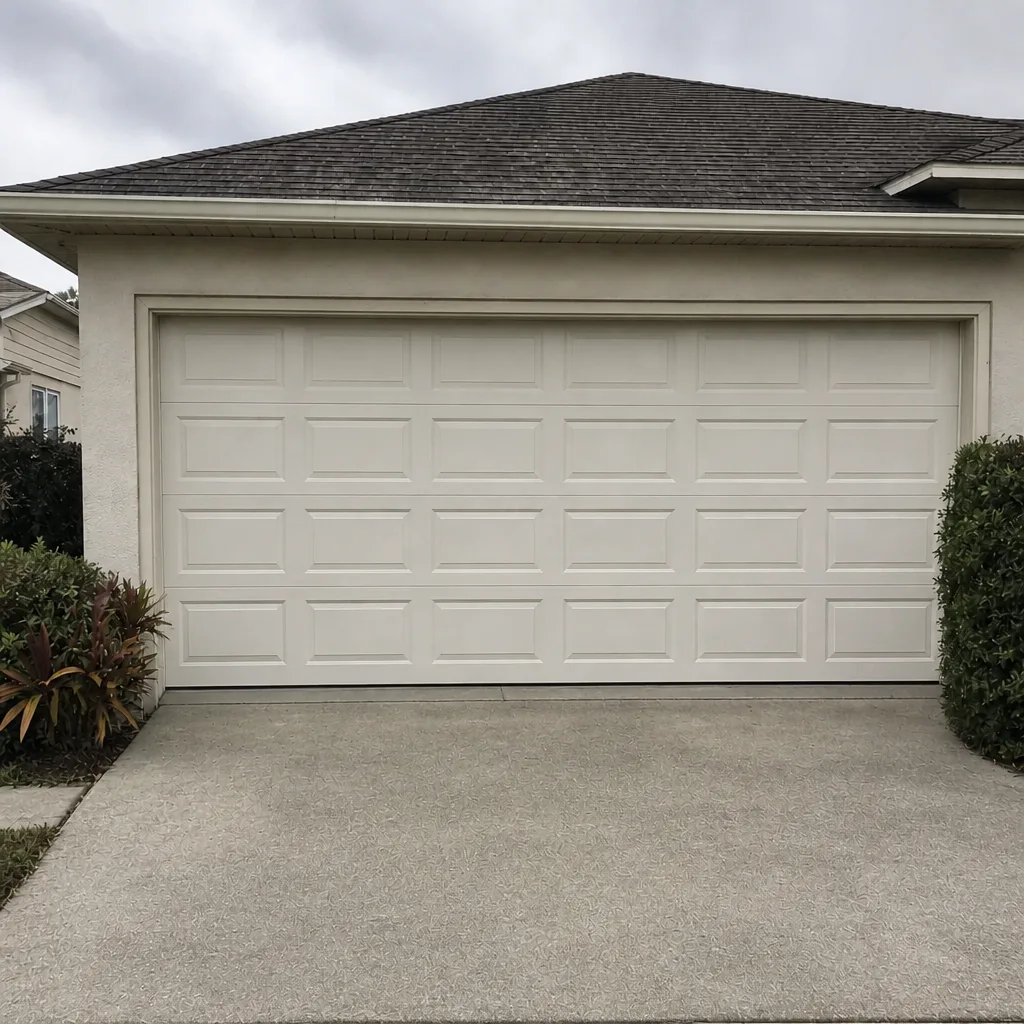 After
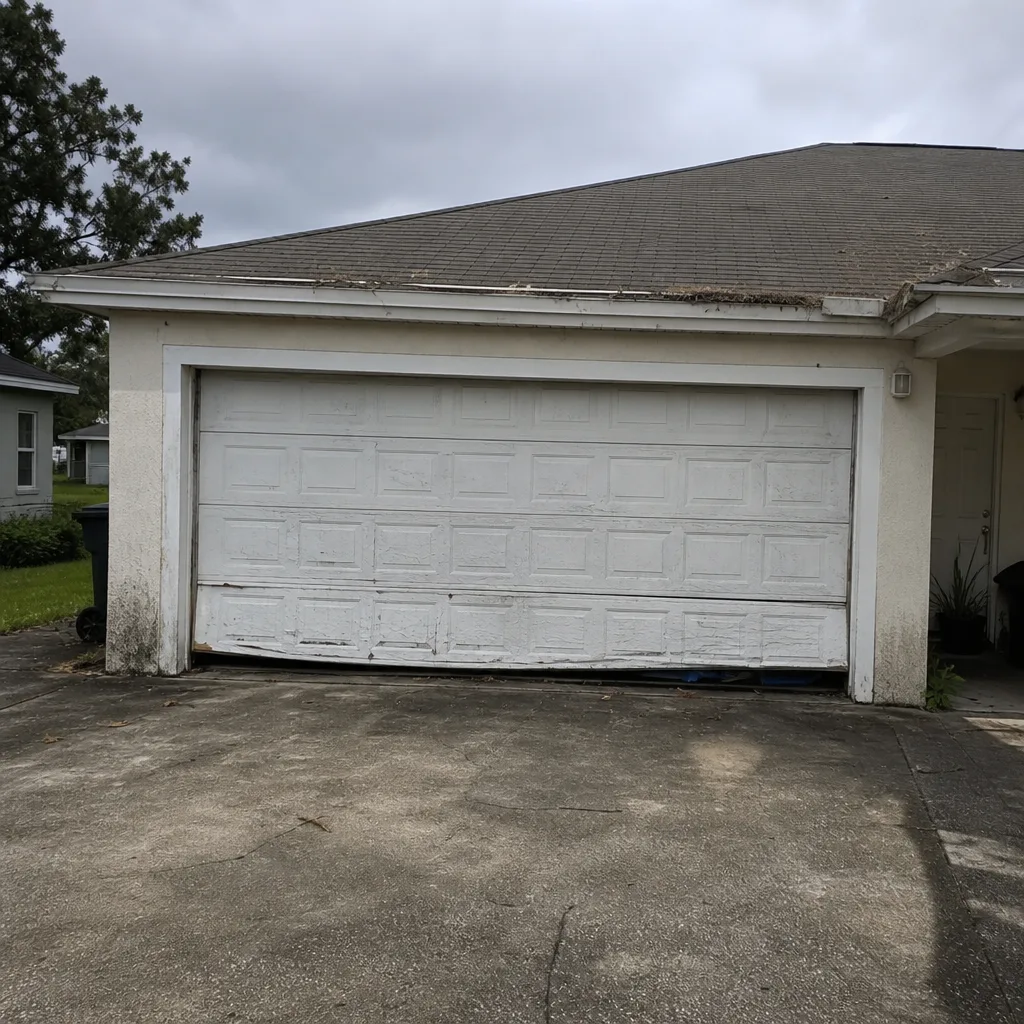 Before
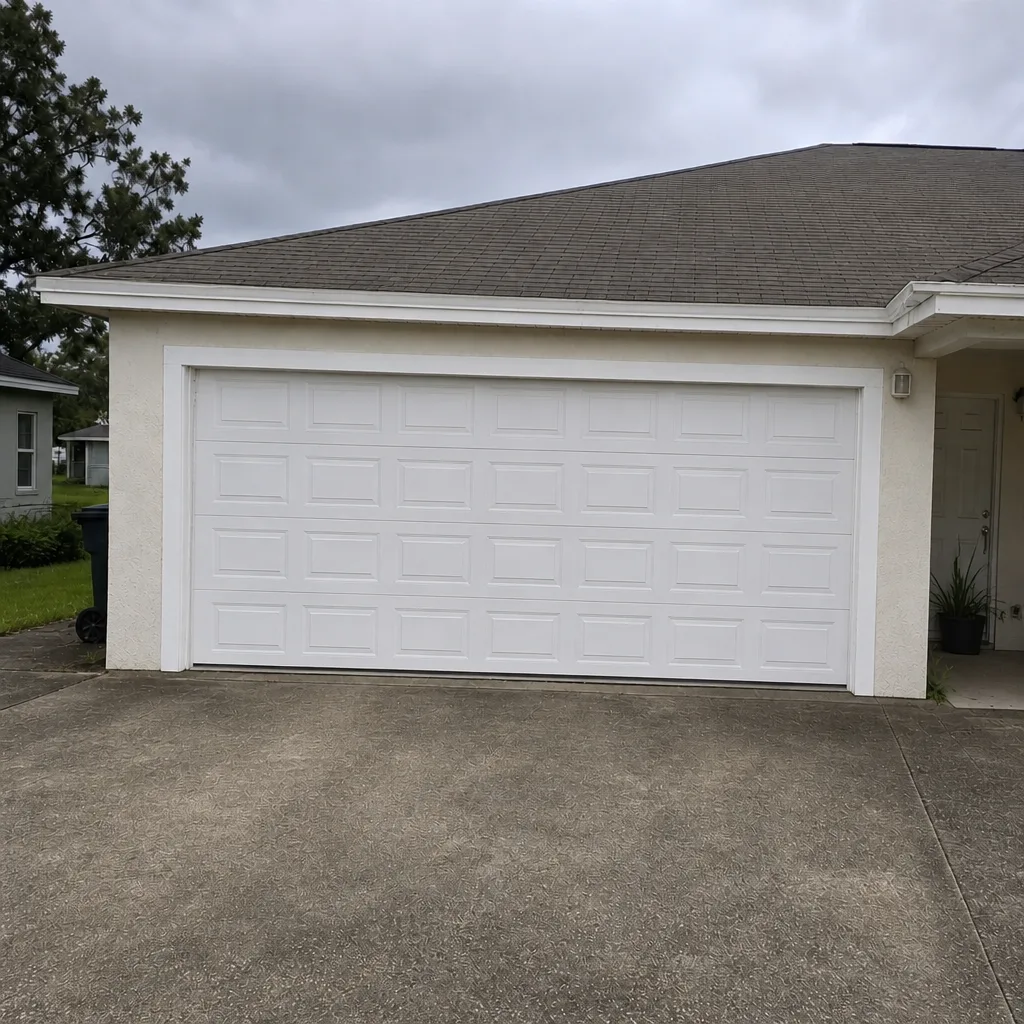 After
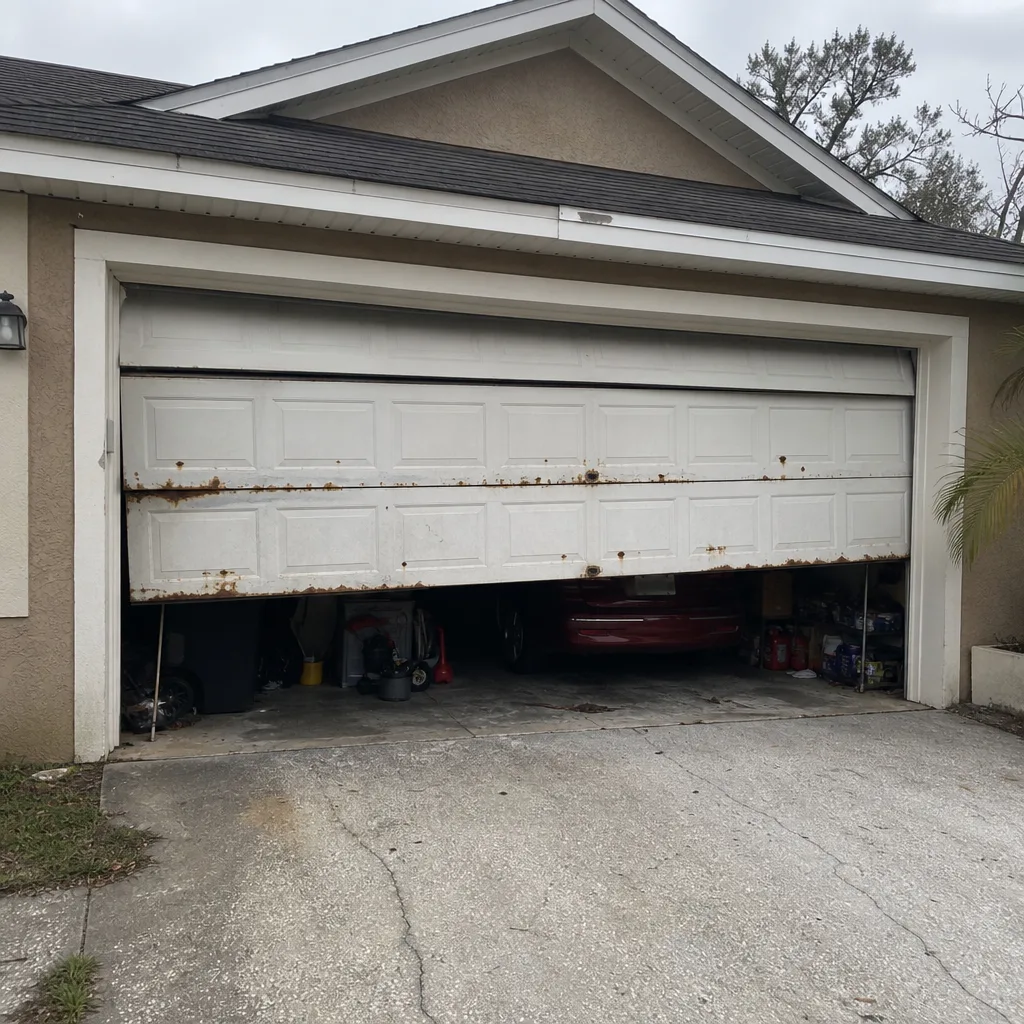 Before
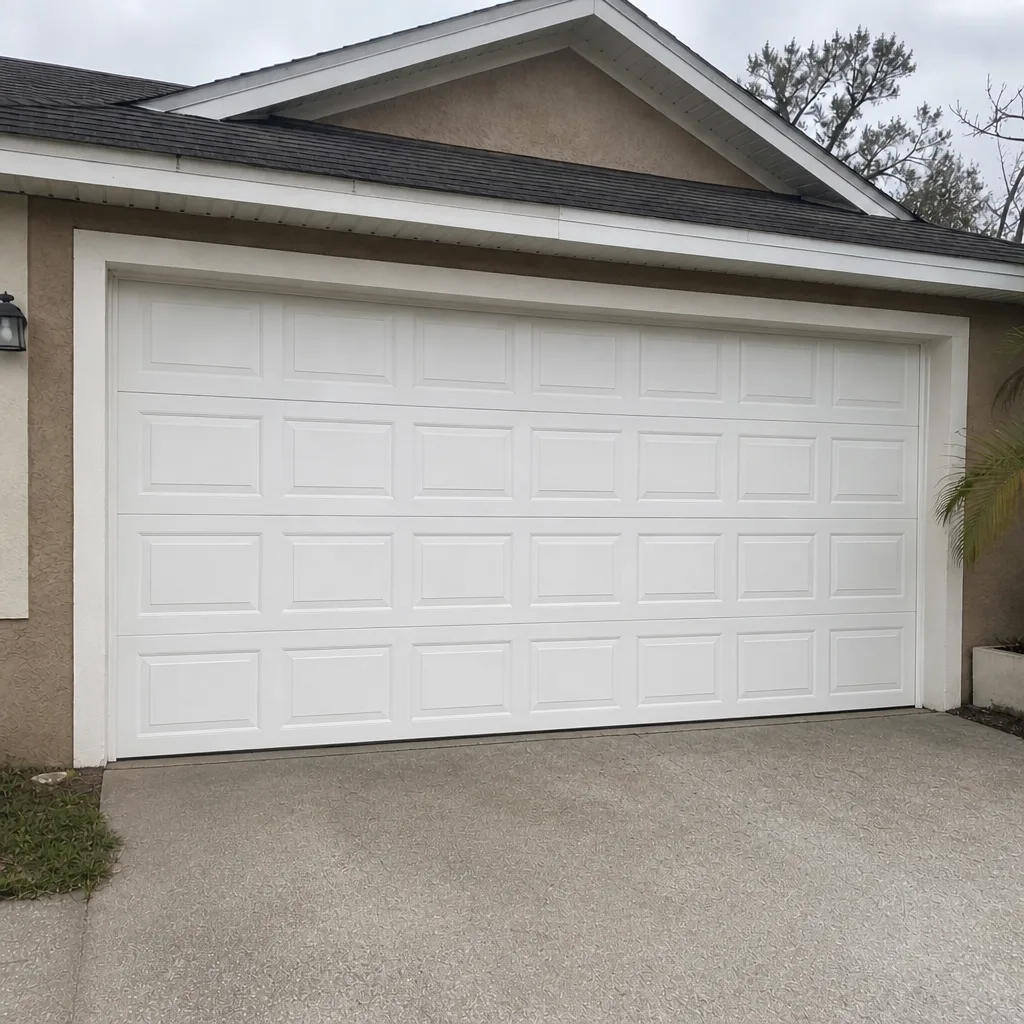 After
When to Call a Professional
There are clear situations where a garage door becomes a safety or security issue, not a DIY project. Call a professional if any of the following is true: a spring is snapped or visibly deformed, a cable is slack or off its drum, the door is hanging crooked or won’t close flush, the door falls or slams when tested for balance, or you see rust or cracking at the bottom bracket or cable end. If any of those symptoms are present, stop trying to operate the door and call. Poinciana Garage Door Repair Co offers free estimates in Poinciana – call (877) 471-4560. We answer 24/7. Fast dispatch from 7am to 7pm, Sunday through Friday, and we’re closed Saturday. If your door creates a security or safety problem, our emergency garage door service is a real option for same-day response, not a next-week appointment. We work on all major brands, including Chamberlain, Genie, Clopay, Amarr, LiftMaster, Wayne Dalton, Craftsman, and Raynor.
Frequently Asked Questions
The most likely cause is a failed torsion or extension spring, followed closely by a safety sensor that’s been knocked out of alignment. Check the spring above the door for a visible gap, and check the photo-eye lights at the floor opening. If the spring is broken, don’t run the opener. Call (877) 471-4560 for a free estimate – we’ll diagnose whether it’s the spring, a cable, or the opener before any work starts.
You can safely do visual inspections, sensor alignment, cleaning, and the manual release and balance test. Anything involving the springs, cables, drums, or the high-tension side of the system is not a homeowner repair. The stored force in those components is enough to cause serious injury. When in doubt, stop and call a trained technician.
Typical estimated spring repair pricing runs in the range for a single spring replacement, with a matched pair usually replaced together and costing about twice a single spring. We set the exact price with a written estimate before any work starts, so you’ll know the number before we begin. Call (877) 471-4560 for an exact quote – estimates are free.
Release the door by hand with the manual release cord and lift it to waist height. A properly balanced door stays there on its own. If it falls, the spring system has failed, not the opener. If it balances easily but the opener still grinds or won’t engage, the problem is in the motor or its drive. We work on the brand already on your door – Chamberlain, Genie, and the rest – so diagnosis is fast. Call (877) 471-4560 to schedule.
Long, hot, humid summers put more thermal stress on torsion springs, which are already under constant tension. Heat causes metal to expand and contract, and a spring in a hot garage works harder and breaks more often than one in a cooler climate. If you hear a sharp bang followed by a door that won’t open, that’s the spring. Call for repair rather than forcing the door.
No, not without your approval. We diagnose the door, quote the repair, and get your agreement before any work starts. The written estimate is the price. If we find something else that needs attention while we’re there, we’ll show you and talk it through before we touch it. Call (877) 471-4560 for a free estimate.
The decision tree: fix it, repair it, or replace it
At the end of every garage door troubleshooting session, you reach a fork. Here’s how we think through it, and how you can too.
Fix it yourself if: the issue is a dirty sensor, a loose bolt, a bent track you can straighten without tools, a bottom seal you can replace, or a manual release that just needs re-engaging. These are safe, low-risk fixes that don’t touch the tension system.
Schedule a repair if: the spring is broken or tired, a cable has snapped or come off the drum, the door is out of balance, the opener is failing, a hinge or roller is worn, or the bottom bracket is corroded. These are one-visit jobs for a trained technician, and same-visit diagnosis and repair is the standard. We quote before we work, so the price is agreed before anything starts.
Consider replacement if: the door is sagging or delaminating across multiple panels, the hardware is beyond repair on a door that’s already had repeated failures, or you’re upgrading for insulation, safety features, and a quieter opener. Replacement is a measured, ordered, scheduled job, so it isn’t same-day work – but it’s worth pricing if repair is chasing the same problem again and again. For a full overview of replacement and new door installation, our garage door installation page covers options, materials, and what to expect from a scheduled install.
If you’re not sure which branch you’re on, that’s the moment to call. Springs, openers, panels, full doors – one call covers it, and a free estimate gets you a clear answer without guessing.
The Bottom Line
A garage door is a system, not a single part. The door that won’t move could be a broken spring, a cable off its drum, a failing opener, or a sensor out of line. The biggest mistake is fixing the symptom you can see instead of finding the failure causing it. Do the safe checks first – visual inspection, sensor test, manual release, balance test – and stop the moment you reach springs or cables. Poinciana’s heat and humidity put extra stress on springs, tracks, and opener electronics, and irrigation overspray and hard water accelerate corrosion at the bottom bracket. Fix it yourself only for the simple, low-risk items. Schedule a repair for anything in the tension system or opener. Consider replacement only when repeated failures make it the smarter call.
If your door has you stuck, call Poinciana Garage Door Repair Co at (877) 471-4560 for a free estimate. We answer 24/7. Fast dispatch from 7am to 7pm, Sunday through Friday. Our technicians have up to 9 years of experience, we work on the brand already on your door, and we quote the price before any work starts. Springs, openers, panels, full doors – one call covers it, and the repair is built to open tomorrow, and the day after.
Written by the team at Poinciana Garage Door Repair Co.